How to Select the "Cleanest" Organic Mattress for Your Budget
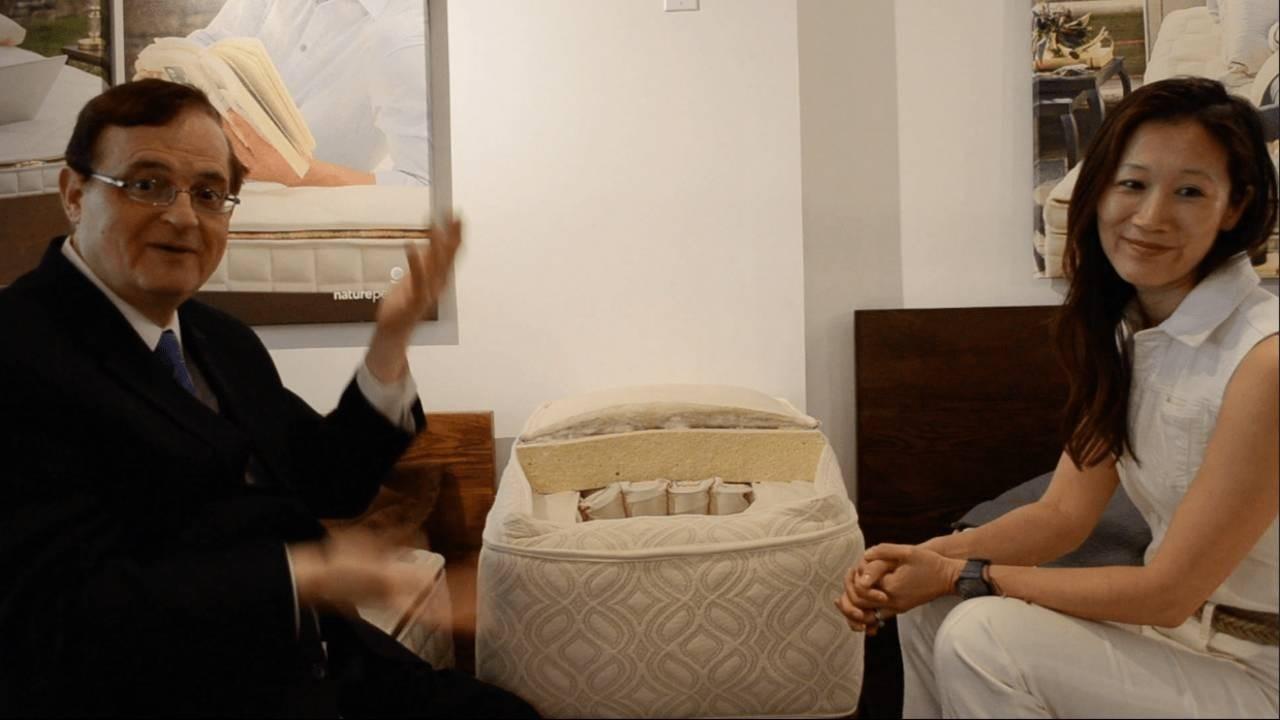
Dec 07, 2020In May 2019, I visited Barry Cik, founder and CEO of Naturepedic®, at Naturepedic's Manhattan store to help you understand how you can select the most "clean," organic mattress for your budget. To accomplish this, we took a deep dive into the components of a mattress, which you can watch in the video below.
But, first, are organic mattresses worth the money?
In a nutshell, Yes!
Popular mattress components (like polyurethane foam and vinyl) are made of toxic chemicals that can contribute to cancer, reproductive toxicity, immunotoxicity, and more. Detoxing the components of your mattress can improve your indoor air quality, reduce your toxic exposures, and reduce the contributing factors to short-term symptoms (like headaches and stuffy nose) and more serious health outcomes that take longer to manifest (like cancer or adverse pregnancy outcomes). You can find more detailed explanations with cited sources in my book A to Z of D-Toxing: The Ultimate Guide to Reducing Our Toxic Exposures (Amazon paid link) and from select third-party sources in the References section below.
Components of Conventional Mattresses
Below are four major categories that comprise a conventional mattress and that tend to be sources of toxic exposures. The "ingredients" of these components can emit toxic fumes and dust. Watch the video further below to learn even more from Barry of Naturepedic.
- MATTRESS CORE is usually made of polyurethane foam or synthetic latex (as well as innerspring). Both are often made of petroleum-based ingredients.
- MATTRESS COVERING is often made of synthetic fabrics, like vinyl or polyester. Synthetic fabrics are also often made of petroleum-based ingredients.
- CHEMICAL TREATMENTS are often added to create resistance to fire (polyurethane foam is highly flammable), water, stains, and microbial growth. Chemicals are sometimes also added for scent too, or to mask unpleasant odors. Some of these chemicals have been found to be toxic or risky to the health of us and our environment.
- GLUES may be used to adhere materials together. These glues can emit toxic fumes.
View this post on Instagram
Healthier Alternative Components of Clean Organic Mattresses
As a conscious consumer, you can evaluate the most valuable organic mattress for your budget by understanding the four key components mentioned above. Popular healthier alternatives for the materials that create mattress components are listed below. In the video further below, Barry of Naturepedic explains these components further and shows us what some of these materials look like.
- MATTRESS CORE is usually made of 100% pure natural latex. Innerspring is often used too, and may be supported/padded with 100% pure natural latex and/or organic cotton and/or wool stuffing. Be aware that some "green," "organic," "nontoxic," and "sustainable" mattresses may contain petroleum-based ingredients too. For example, a "natural, nontoxic" foam can be 1% nontoxic and 99% petroleum-based.
- MATTRESS COVERING is often made of 100% natural fabrics, like organic cotton or wool.
- CHEMICAL TREATMENTS are not added for anything. Organic wool offers natural resistance to fire and liquids so added chemicals aren't needed.
- GLUES are either avoided (and components are sewn together, but this is more expensive) or have low-VOC emissions.
View this post on Instagram
Helpful Certifications for Mattress Components
It's hard to navigate "greenwashing" and trust product claims so the certifications below are helpful.
- Global Organic Textile Standard, or GOTS, certification
- Global Organic Latex Standard, or GOLS certification for organic latex
- Oeko-Tex Standard 100 or Greenguard Gold
- MADE SAFE®
Select the most valuable organic mattress for your budget
As my family was growing from just my husband and I to now three kids, I spent many frustrated and disappointed hours (and years) trying to figure out the best value for my budget. It is with this experience that I was excited to create this video podcast with Barry Cik, founder and Technical Director of Naturepedic. Mattresses are expensive, and for a growing family, it can be a significant portion of your household expenses. So I often wanted to see the materials that I read about. I loved hearing from Barry that Naturepedic creates the most nontoxic mattress that your money can buy—offering the best value they can offer for various price points. Plus, they can a lot about your comfort and our planet too!
Was this content helpful? I welcome your feedback and questions @ruanliving on Instagram or Facebook, @srgushee on YouTube, or email me at [email protected].
Resources
Listen to my audio podcast with Barry Cik on episode 30 of the Practical Nontoxic Living podcast: Master Organic Mattresses & Sustainable Interior Design for an Eco-friendly Home
For more tips on how to improve your indoor air quality and specifically your sleep area, check out the workbooks below. Just click on the images to learn more about them on Amazon (please note that they are Amazon paid links).


In addition, if you'd like more information on how much of your budget you should invest in a healthier mattress, A to Z of D-Toxing provides more detailed explanations on the toxic exposures from mattresses and the health risks that toxic exposures pose.


References
This article is a great introduction into the complex issues related to our mattresses. For more details, please check out the sources below.