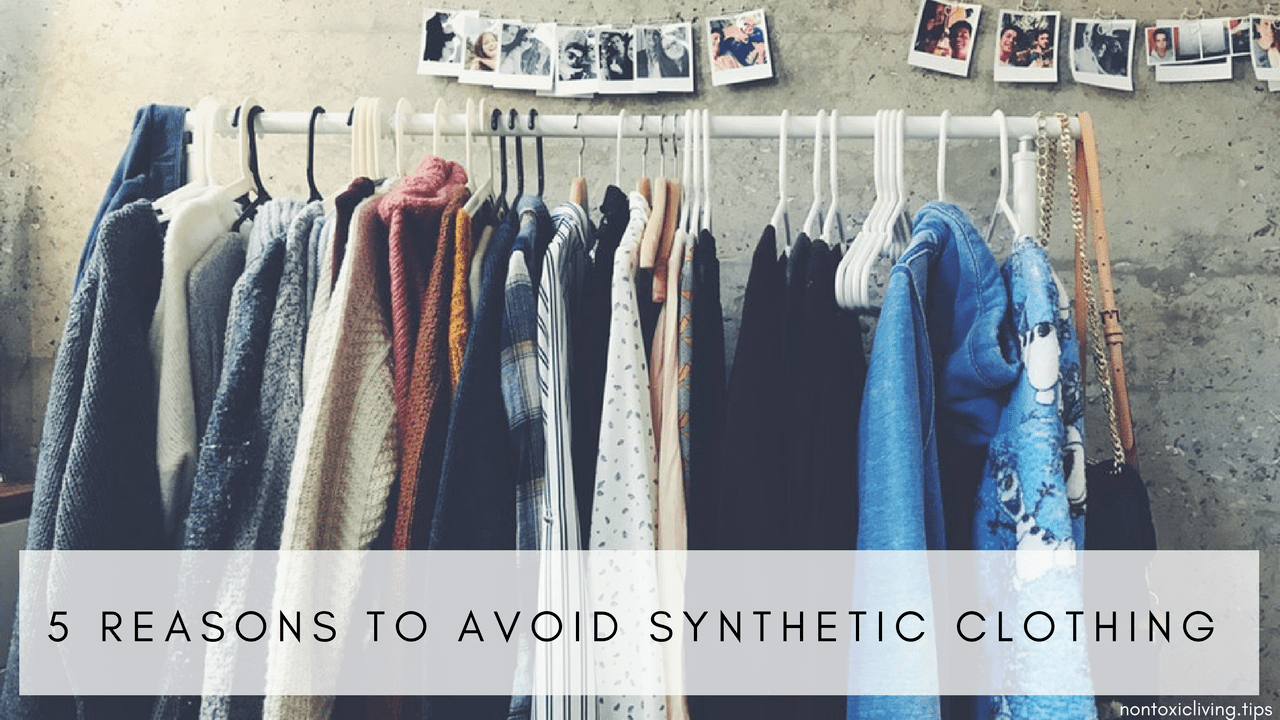
5 Reasons to Avoid Synthetic Clothing
Mar 23, 2018by Angela Cummings and Sophia Ruan Gushée
When I first learned about chemicals found in everyday products, I looked to make simple, gradual changes.
Clothing was one of the areas that seemed logical.
As my clothes wore out one by one, I replaced them with cottons instead of polyesters.
Boy, am I glad that I did. Here’s what I found.
Synthetic Fiber vs. Natural Fiber
Synthetic fibers are made from plastics and oil byproducts. Whenever I think of synthetic fibers I remember reading that synthetic fibers melt in a fire. (1) Not burn up into ashes. They melt!
Materials that are made from synthetic fibers include:
- Polyester
- Nylon
- Acrylic
- Rayon
- Microfiber
Natural fibers are made from 100% natural products. Materials made from natural fiber include cotton, wool, hemp, linen and silk.
While bamboo is a natural fiber, it requires a significant amount of chemicals to soften bamboo for clothing fabric. Therefore, it is not typically considered a healthier material.
Here are the top 5 reasons I switched to natural clothing:
1. Made from plastic and oil byproducts. I found it hard to believe that synthetic clothes were made from plastics and oil byproducts. So I did a little online research. Sure enough, it’s made from an element of crude oil—the same crude oil in your car and that gasoline is made from.
Clothing material sits on our skin all day and night, and contributes to the air we breathe. It’s reasonable to conclude that synthetic clothing may be one of the ways that chemicals are entering our bodies.
2. Synthetic material needs synthetic dyes. Synthetic material does not absorb natural dyes well, and sometimes not at all. The synthetic material absorb synthetic dyes far better. Therefore, it’s reasonable to expect that synthetic clothing is dyed with synthetic dyes.
3. Yucky feeling clothing. When I talk to people about clothing, I often hear that they feel “yucky” when wearing synthetic clothing. When they talk about natural clothing they mention comfy, breathable, cotton clothing. Our bodies are so intelligent! They know what’s healthier for us.
4. Holds bacteria. Body odor from armpits and sweat is created from bacteria and toxins that the body is trying to rid of. Everyone has it, there’s no shame here! Synthetic materials hold the bacteria more often than natural materials.
We try to cover up the odors by using fragranced laundry detergents and fabric softeners. But we don’t need to. Wearing clothing made from natural materials, along with rinsing clothes with vinegar, gives a better opportunity for clothes to smell fresh without added chemicals.
5. Static cling. Clothes that cling together are electrically charged and result in static cling. When my closets were filled with synthetic clothes, I kept handy a container of static cling spray. After converting my closet to all-natural clothing, I don’t even think about static cling any more. I haven’t peeled a sock off my shirt in years.
In Summary
Converting your closet from polyester pants to cotton khakis is an easy way to reduce the amount of chemicals in your closet. Synthetic clothing fibers are made from plastics and oil byproducts and most times is dyed with synthetic dyes. The material can hold bacteria, increase static cling and feel just plain “yucky.” Feel good in your clothes every day! Consider buying 100% natural clothing as you replace your clothes.
References
(1) "Stop, Drop, and Roll." City of Phoenix - Fire Safety. https://www.phoenix.gov/fire/safety-information/fire-safety/stopdroproll