What Shapes Us—and What Can We Shape?
Oct 20, 2026Practical Nontoxic Living™ Podcast, Episode 136
What shapes our health, habits, identities, and futures—and how much can we shape in return?
In Episode 136 of Practical Nontoxic Living, Sophia Ruan Gushée introduces a new season exploring how environmental exposures, gene expression, reproductive health, our homes, habits, expectations, and choices can influence who we become. With previews from physicians, researchers, designers, entrepreneurs, and people whose lives took unexpected turns, the episode asks the larger question connecting them all: What has shaped who we are—and what can we do to shape who we want to become?
Episode 136: Environment, Epigenetics, Home, and Choice
Practical Nontoxic Living expands beyond reducing toxic exposures to ask a broader question: What shapes us physically, psychologically, environmentally, and culturally—and where do we still have agency?
This season explores environmental health, epigenetics, fertility, cell phone radiation, home design, the nervous system, aging, instinct, persistence, uncertainty, and nonlinear paths through life. Underneath them is a question Sophia has been asking in different forms since childhood: What can we meaningfully influence today that may shape the future we want?
Topics and Guests in This Episode
- Why Practical Nontoxic Living™ is less about restriction or perfection than repeatedly asking, “What’s the wisest decision?”
- Dr. John La Puma, board-certified internist, trained chef, and author of Indoor Epidemic, on why small, repeatable choices around food, time outdoors, and daily routines can matter more than they seem.
- Carmen Messerlian, reproductive epidemiologist and longtime fertility researcher, on reproductive health as a window into overall health, environmental exposures, epigenetics, and how our environment can influence gene expression.
- Dr. David Carpenter, public health physician and environmental-health researcher with more than 500 peer-reviewed publications, on cell phone radiation, brain cancer, and why scientific studies and expert conclusions can appear to conflict.
- Deborah DiMare, interior designer and author of Vegan Interiors, on how the spaces around us may influence stress, the nervous system, our sense of safety, and how we feel in our homes.
- Dr. Haley Genovese, fertility physician and reproductive endocrinologist, on how working in reproductive medicine has influenced the personal-care products and exposures she minimizes in her own life.
- Andrew Yang, entrepreneur, author, and former U.S. presidential candidate, on leaving a prestigious legal career that matched his parents’ definition of success—but not his own.
- Cyrus Massoumi, entrepreneur, Zocdoc co-founder, and former McKinsey consultant, on enduring repeated rejection, believing in an idea when others say no, and the harder question of knowing when persistence is wise—and when it may be time to change course.
- Jill Kargman, creator and star of Odd Mom Out and co-writer and star of Influenced, on trusting your instincts when experienced people disagree with you—and maintaining your own “rudder” while remaining open to advice.
- Sophia Ruan Gushée on the larger question connecting these seemingly different conversations: What shapes us—our genes, environment, habits, expectations, and experiences—and what can we consciously shape in return?
Questions Explored in This Episode
- How much of our health is shaped by our environment?
- How can environmental exposures influence gene expression?
- Why can experts reach different conclusions about cell phone radiation and brain cancer?
- Can the design of our homes influence stress and how safe or settled we feel?
- Which small health choices may matter more than they appear to?
- How much of what we call personality or success comes from patterns and expectations we absorbed without consciously choosing?
- How do we know when to persist, when to change course, and when to trust our own judgment?
Edited Transcript: Practical Nontoxic Living Episode 136
The transcript below has been lightly edited for clarity and readability while preserving the substance and voice of the recorded episode.
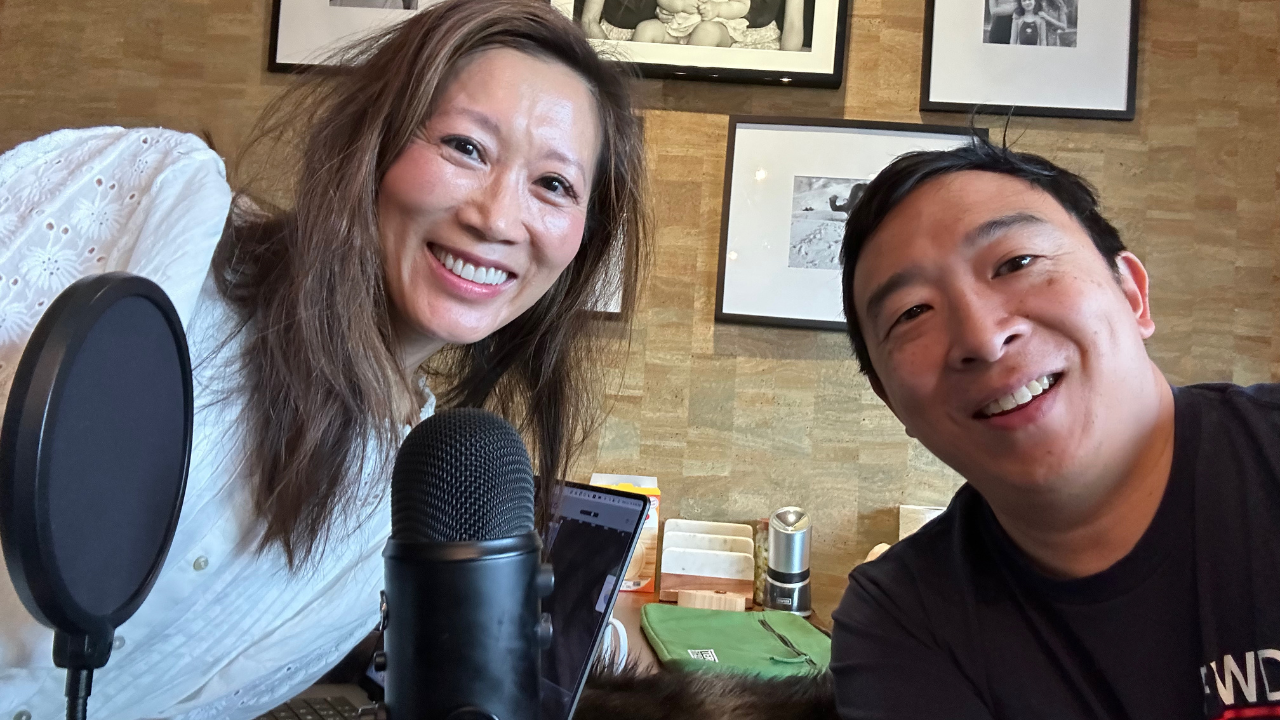
Andrew Yang on How Much We Ask of Ourselves — 00:00
Andrew Yang:
I was partially inspired by the musical Hamilton, where you watch that and realize, Wow, these guys had to do a whole lot in a really brief period of time. It all happened within one generation, and Hamilton himself was a young man during it.
I walked out of that theater with my wife and thought, Wow, maybe I’m really not asking enough of myself, because you can do more.
What Is Practical Nontoxic Living? — 00:28
Sophia Ruan Gushée:
That’s Andrew Yang. He’s one of the people you’ll hear from in a series called Amazing Nonlinear Paths—conversations with people whose lives did not follow a plan.
I’m Sophia Ruan Gushée, host of the Practical Nontoxic Living™ podcast.
I hunt for the small changes whose benefits compound over a lifetime and through generations. The first eight years of that search led to my book, A to Z of D-Toxing: The Ultimate Guide to Reducing Our Toxic Exposures.
Now I share the questions that continue to guide my hunt because the answers keep changing.
But the questions don’t.
I hope you’ll join me in asking them. I’m so glad you’re here.
This episode is a preview: short clips from conversations coming up this season, with me in between. And since I say Practical Nontoxic Living a lot, this is what I mean by it. People assume nontoxic living means restriction or perfection.
It’s neither.
It’s one question asked over and over:
What’s the wisest decision?
Which is not necessarily the healthiest, because every decision exists within the context of a real life, not a laboratory.
I read the research. I experiment with solutions in my own home and with my own family so that your next wise decision can be an easier one.
I’m recording this at a moment when life is feeling very precarious.
How will AI rearrange jobs and industries? What is the news doing to your nerves? What are phones doing to our kids?
I can’t answer those questions.
What I can help you with is the part of your life that you touch every day and sleep inside every night: your home, and what you buy, own, and do inside it.
Which turns out to be more than chemistry. It’s about your home with a capital H, your body, your mindset, and how you feel within your own skin.
This season, I explore those questions with guests who’ve spent their careers on questions I don’t want to answer alone.
In this preview episode, you’ll hear from a reproductive epidemiologist on what everyday exposures can do to gene expression; a fertility doctor on what she doesn’t use at home; an interior designer on designing a room to soothe your nervous system; a public health physician who helps us understand why we’re confused about whether cell phone radiation increases brain cancer risk; and then a different kind of detox altogether: people whose lives didn’t follow the plan.
They all come back to one question, asked two ways:
What has shaped who we are? And what can we do to shape who we want to become?
What Can We Meaningfully Influence About Our Health and Future?
Decades before I was ever pregnant, I was curious about what shapes us.
How do we become who we become?
When I was a child, I wondered how much control I had over certain parts of my body, my health, and how my life would unfold.
I remember being seven or eight years old when I saw a photograph of an older woman. I want to say it was Sophia Loren. She looked so happy, glowing from joy and vitality.
This was striking because the older women in my real life didn’t have this inner vitality. They looked like they were suffering a bit—from physical pain and discomfort, from illness, and from society overlooking them more and more over the years.
I remember wanting to identify: What is it I can control that will get better with age?
Not: How do I avoid getting old? But what are the parts of my life, and of me, that I can improve so that when I’m in my 50s and beyond, I’m also glowing and light and confident and nimble? What is this mysterious thing that some older people have figured out?
I still do it.
I’ll sometimes see someone who is much older who looks eternally youthful. Often these people have mastered something, whether it’s a serious yogi or a CEO.
Not that those are the secrets to what I’m talking about. But they happen to have figured out something that has brought along a lot of inner peace and agency. And they move with a lightness, health, vitality, nimbleness, and joy that I’ve wanted to understand.
Now that I’m in my 50s, I know there’s a lot we can’t control. But there is a lot we can control. And I’ve kept wondering what we can meaningfully influence. So the questions I keep circling have gotten more narrow. I continue to wonder how much of how we turn out is nature versus nurture, but also:
What are the choices available to me today that shape the future I want?
So let’s start with some of the things that are yours to decide and can have a meaningful influence on your health and well-being.
One clarification, though, because nontoxic living is sometimes interpreted as a shopping list. What I actually pay attention to is what we buy, what we own, and what we do.
What you cook. When you eat. When you go outside. How you sleep.
Some of the changes with the strongest evidence behind them cost nothing.
Small Health Choices Add Up — Dr. John La Puma — 08:21
Here’s a clip from my upcoming episode with board-certified internist and trained chef Dr. John La Puma.
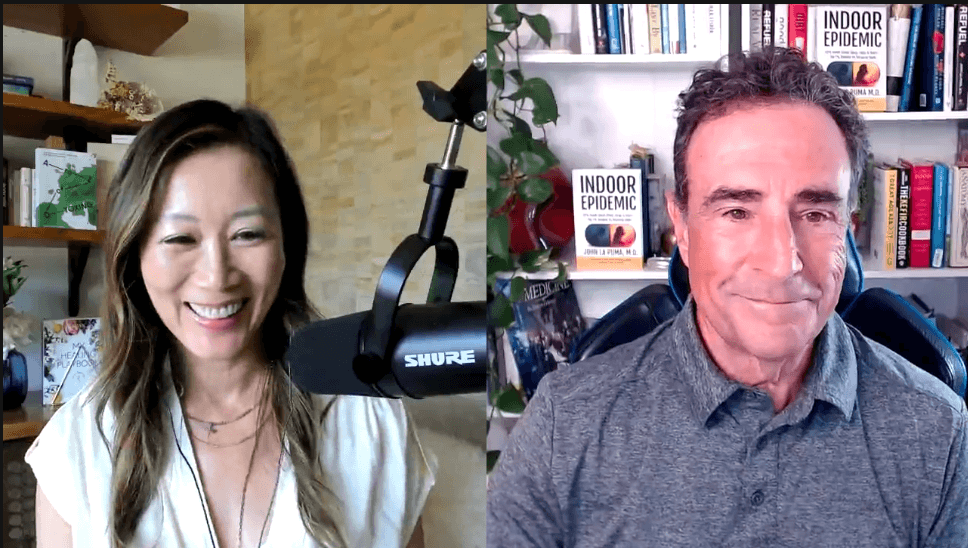
His new book is Indoor Epidemic, about what living most of our lives inside is doing to us.
This clip is on exactly that—and why small changes can be more profound than they look.
Sophia:
What do you wish more people knew about the opportunity to feel better and actually be healthier from what you eat and how you cook?
Dr. John La Puma:
Just like being outdoors at the right time, in the right place, for the right amount of time, food and what you eat is very much within your control.
Many things are not in our control in life, are they, Sophia? And yet this is in our control, and it’s something we get to do every day—for eating three times a day and sometimes more, and for being outside in a therapeutic and preventive way.
The same thing. We get to do that every day if we choose.
And it matters.
In fact, the timing matters probably as much as the duration. And in eating and food, the timing also matters.
So I do wish people had a sense that they have more control than they think, and that more small choices make a big difference.
And you don’t have to be perfect. In fact, perfect is the enemy of good. Change is often created incrementally with those small changes.
Sophia — 09:27:
Dr. La Puma and I are aligned in acknowledging what we can’t control, but being really excited about all the things we can control.
Environmental Exposures, Fertility, and Gene Expression — Carmen Messerlian
Since struggling to become pregnant in my early 30s, I became even more particular about healthy eating and exercise. I thought I was being thorough.
It took me years longer to realize that my children would also be shaped by the toxic chemicals, heavy metals, microplastics, and electromagnetic fields from what I buy, own, and do—and that those exposures could have long-term consequences.
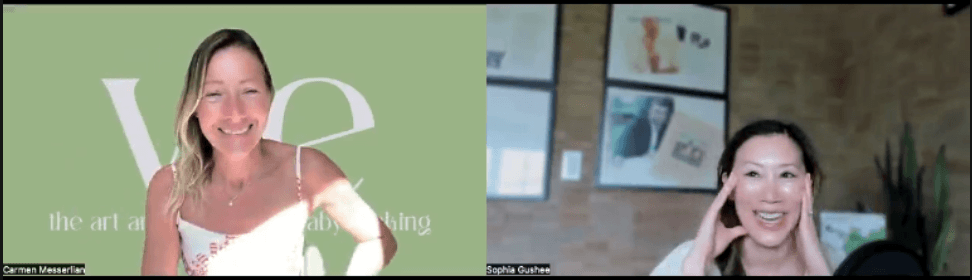
Here’s a clip from my upcoming episode with Carmen Messerlian, who has studied fertility for more than 20 years. I asked her why reproductive health is worth paying attention to even if you’re not planning on having children.
Sophia:
Would you talk about why reproductive health is relevant to those who are not looking to have children in the future? How can it be an indicator of overall health and lifespan?
Carmen Messerlian:
That’s a beautiful question and critical, because when I talk about reproductive health and fertility health, it’s not just to make babies.
Our reproductive systems, both men and women, are your fuel for your future health. It’s the engine that drives every other cellular process in your body.
Sophia:
Here’s the part that is not in dispute: Your environment changes which of your genes get switched on and off.
That’s epigenetics. The evidence is strong.
Smoking, for instance, leaves marks on DNA that are still detectable years after someone quits. Your body keeps a record of what it’s been exposed to. But here’s what gives me hope.
In the largest study of its kind, nearly 16,000 people, some of those epigenetic marks were still present 30 years after quitting smoking.
But most moved back toward the levels of people who’d never smoked within five years. And the health benefits of quitting are well established at any age.
Smoking is the best-studied case. It is not the only one.
Exposures during pregnancy and early childhood are associated with health outcomes decades later. There’s a whole field devoted to it called the developmental origins of health and disease.
What’s harder to pin down is the contribution of any one thing in my own house. However, the evidence so far is enough to make me reduce what I can.
Since becoming a mom nearly 20 years ago, I’ve studied practical ways to decrease my family’s toxic exposures. There were definitely times when there was something I suspected was not good for my family or me, and I still didn’t look into it for years because I didn’t want to know. I didn’t feel like I had the capacity to change something, and I didn’t want to live with knowing that I hadn’t. It’s more obvious than ever that not looking is its own decision, and I was making it without admitting it. So I’ll ask you what I had to ask myself: What’s one thing in your home or in your life that you’ve decided not to look into?
How Environmental Exposures Can Influence Gene Expression
Carmen Messerlian:
Having a gene for something like breast cancer isn’t the same as that gene being switched on.
The expression of those genes is through what we call epigenetic measures or epigenetic processes.
Each and every one of our genes has marks. These marks can turn that gene on or turn that gene off, or make it express a lot or make it express a little. That’s what we call hyper- and hypomethylation of a gene. That process tells that gene to go forward and express the protein, or pull back and hold off expression. That is modifiable by the environment—by everything that you’re in contact with.
Sophia:
Lead is the clearest case. The harm is settled, and there’s no level anyone has identified as safe.
It also turns up at measurable levels in ordinary things. Lead is in soil, so it’s in crops, so it’s in food.
Which means the useful question isn’t whether something contains lead. Almost everything does. It’s what adds up over a childhood and over a lifetime that matters. That’s the arithmetic I did on salt, and you can hear more of that on an upcoming episode.
What’s harder is everything in between: the doses most of us actually live with, our unique cocktails of toxic exposures, and at which stages in life we’re exposed to these things. That’s what complicates science learning more about how we’re really influenced by these toxic exposures.
People don’t usually ask me about heavy metals. More often I’m asked about endocrine-disrupting chemicals—or hormone-disrupting chemicals—and radiation from our everyday technologies. And that’s where some of this season’s episodes go.
This season, my guests and I will explore how our homes—which encapsulate so much of what we buy, own, and do—shape us, and how we can shape our homes and lifestyles for our healthiest, happiest future, with our own unique limitations, preferences, and potential.
Cell Phone Radiation and Brain Cancer: Why Experts Disagree — Dr. David Carpenter
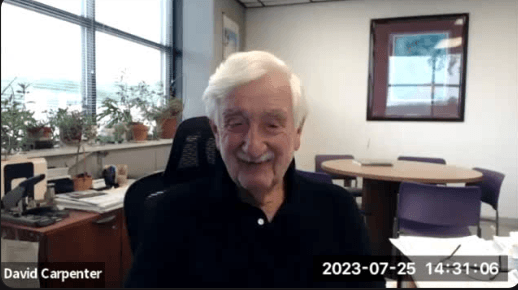
David Carpenter is a public health physician and public health hero with more than 500 peer-reviewed publications.
Years ago on the podcast, I asked him how strong the science is on brain cancer risk from cell phone radiation. Here’s what he said.
Sophia:
Brain cancer is often asked about. Just the other day I was asked, “So does cell phone radiation cause brain cancer? Do we know that yet?”
Dr. David Carpenter:
We know that. We’ve known that for probably 20 years.
There have been numerous studies, including studies actually done by the World Health Organization
Sophia:
Then, in 2024, a World Health Organization agency followed 250,000 phone users and found that the heaviest callers had no more brain tumors than the lightest.
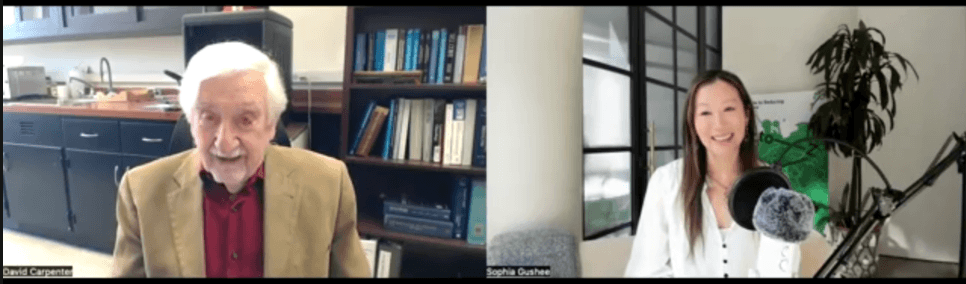
So I asked David to come on the podcast again and talk about whether the latest science has changed his mind—and what he would like the public to know about brain cancer risk from cell phone radiation.
Sophia:
The reason we connected is because, in the past, when you and I have talked, I remember being so struck by how clearly you stated that the science has been clear for a long time that cell phone radiation increases the risk of brain cancer.
And then, a few months ago, I started to notice articles online about a recent study showing that cell phone radiation does not increase the risk of brain cancer.
I thought you’d be the perfect person to help the public—who would be very confused by these headlines—make sense of them.
Dr. David Carpenter:
Well, I have strong feelings on this subject.
Sophia:
He does.
We spent a lot of that episode on it.
Home Design and the Nervous System — Deborah DiMare — 18:36
Your home is shaping you, whether you designed it that way or not.
Our physical environment shapes our biology because the things that create our spaces, everything in them, and what we do in them influence what we inhale, absorb, see, and touch. Those are biological inputs.
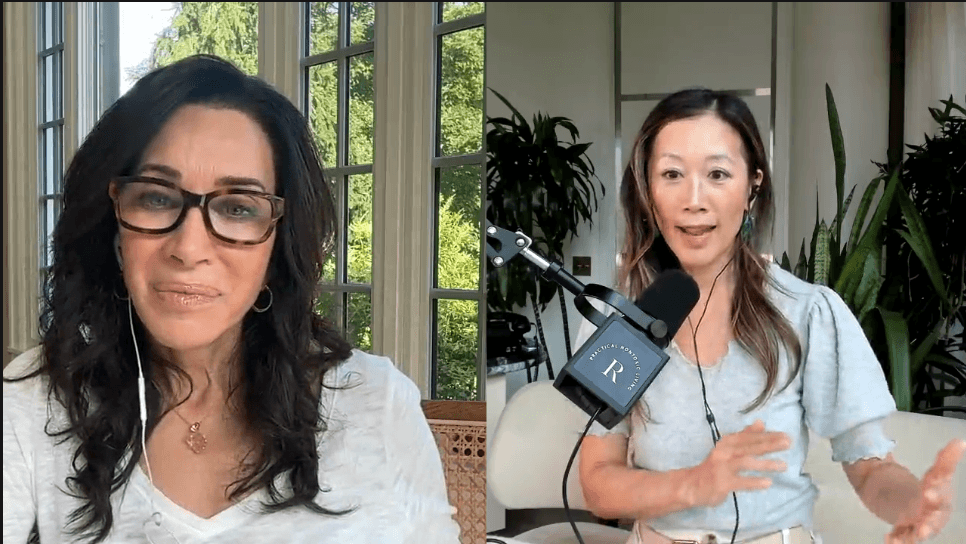
With that in mind, I’ve been really curious about how we can design our spaces to support our home with a capital H: our bodies, our minds, our planet, our collective home, and the ease we feel within our own selves. I was thrilled to bring this question to designer Deborah DiMare. She shares her expertise on how we can design our spaces to support our nervous systems.
Deborah DiMare:
It all goes back to, as I’ve learned, our instinct to survive.
We are constantly assessing danger, and we’re not aware of it. We are constantly assessing an environment for danger. Our body has a system described by polyvagal theory, which is our body’s way of organizing our nervous system and trying to keep it as balanced and connected as possible. And when it’s not, we go into fight or flight. We also go into shutdown or freeze, where we swallow and our throat tightens up. So creating a calm environment will keep that fight-or-flight mechanism and that shutdown system from happening. That’s why we all seek those types of environments, because it is our natural instinct to want to be safe. A calm environment keeps us safe. So that’s it in a nutshell—why we all seek that.
Sophia — 19:43:
To prepare for our conversation, I was looking online and saw pictures of a room full of angles—a coffee table with angles and other angles from furniture in the room—versus a room that had more curves, like a circular coffee table and sofas and chairs that were more rounded.
When I saw the room with angles, I immediately thought about when my children were young and how on high alert I would have been to protect my babies from the corners. I wasn’t aware how much things like angles would affect my nervous system and my protective instincts. Fight or flight, just as you were saying. It’s so great to be aware that what you see in your home can trigger stress—or help you relax and realize there’s no threat here.
Deborah DiMare:
That’s right.
The goal is not to create chaos. Clutter is chaos, and clutter literally puts your body into fight-or-flight mode without you realizing it. There are so many different things that you can do in your home.
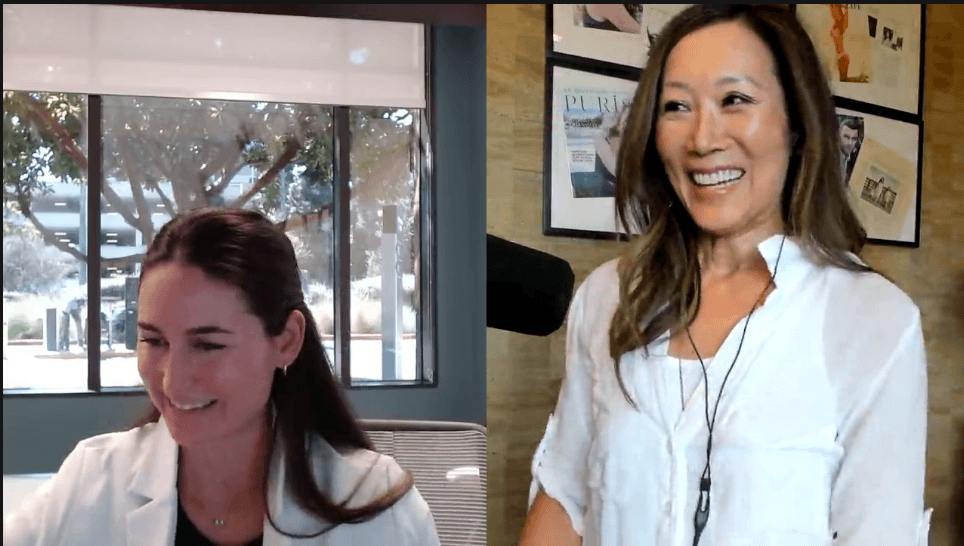
Fertility Doctor on Fragrance and Everyday Chemical Exposures — Dr. Haley Genovese — 21:03
I also ask our guests how their work and expertise have changed their personal lives and personal choices.
Here’s a clip from my interview with Dr. Haley Genovese.
Sophia:
Based on your work experience and what you’ve been reading in the science, I was wondering whether those experiences have changed any of the products you use or your behavior.
Dr. Haley Genovese — 21:45:
Yeah. I do try to minimize my personal use of products that would contain these kinds of chemicals. I’m kind of a minimalist with my skincare and personal-care products anyway. I really don’t use hairspray or fragrances.
We can’t use fragrances anyway, working in my job, because we want to minimize exposure of those things to the embryos. We don’t wear anything like that that could be toxic to them.
I don’t have specific “clean living” products—you would probably know that better than me—but I do think minimizing exposure to those kinds of things is important and is something I would recommend.
Sophia:
It’s interesting that it’s a protocol in the laboratory.
Dr. Haley Genovese:
Yeah.
Amazing Nonlinear Paths: Careers, Uncertainty, and Redefining Success
Later in the season, my guests and I look at a different kind of detox: Detoxing your expectations, definitions of success, and your relationship with risk and uncertainty.
I started these conversations for young people. I had high school students, college students, and people in their 20s in mind—including my own daughters—because they’re headed into a very uncertain future where entire industries are being disrupted. Nobody can tell them how best to prepare for the future. So how do you make choices today when the landscape of the future keeps changing—and changing pretty dramatically?
The more of these conversations I recorded, the more I realized they’re helpful for me too. And I think they’ll be helpful for you too.
I’m calling this series of episodes Amazing Nonlinear Paths, because not having a plan—or watching your plan fall apart—can sometimes lead you to a much better path and outcome than you ever could have imagined. That’s what these conversations keep showing me. And I hope they help you get more comfortable with thoughtful risks and uncertainty.
It made sense to include this series in the Practical Nontoxic Living™ podcast because it’s so much harder to take care of the physical things I often talk about on this podcast when your goals and emotional well-being need support too.
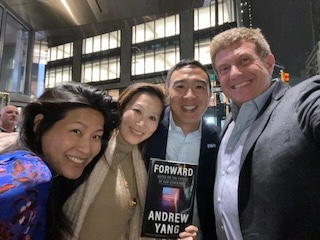
Andrew Yang on Career Expectations and Redefining Success — 24:12
Here’s a clip from an upcoming episode with author, entrepreneur, and former presidential candidate Andrew Yang on his parents’ expectations and definitions of success—which were not the right fit for him.
Sophia:
When you were young, what did you want to be when you grew up?
Andrew Yang:
When I was really young, I read a lot of science fiction and fantasy novels.
So I wanted to be a knight or an adventurer.
There was a period when I wanted to be a secret agent and a judge.
Anything James Bond could do, I thought, well, I should try and learn how to do that too—whether it was skiing, skydiving, scuba diving, or whatever it happened to be. I think that’s one reason why I left the law. It felt like the opposite of my childhood aspirations, honestly.
I did say to my parents at the time—and this might come across as self-indulgent—but I said to my parents, “I didn’t dream about being the scribe,” which is what it felt like I was at the law firm. It was like I was documenting someone else’s achievements. I even said to them, “Did you immigrate to this country so I could document other people’s achievements? That doesn’t seem like the desired outcome.”
But, of course, for them, the desired outcome was that I had already “made it” because I was working at a prestigious firm after law school.
Cyrus Massoumi on Rejection, Persistence, and Building Zocdoc — 25:25
Here’s a clip from my upcoming episode with entrepreneur Cyrus Massoumi.
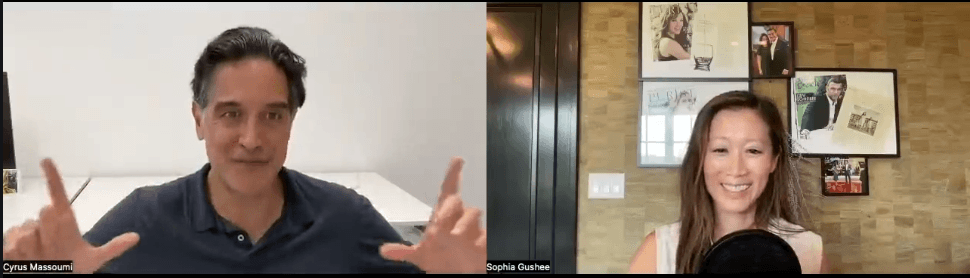
His mother wanted him to be a doctor or a lawyer.
He became neither.
He co-founded Zocdoc, the site people use to find a doctor who takes your insurance.
By 2015, the company was valued at $1.8 billion.
This clip is on when it’s wise to keep going, when it’s wise to quit, and when it can pay off to listen to your instincts.
Sophia:
I love the story that you had to get a thousand no’s to get the first ten yeses from doctors for Zocdoc.
Would you talk more about that experience?
Cyrus Massoumi — 26:12:
There were a couple of iterations of that story.
One that I like talking about was that I was the first salesperson for Zocdoc. I would walk into doctors’ offices, never having sold something to doctors before. Often their receptionists would just tell me to bug off, and a few times they made it even more extreme, where they called building security and had me escorted out of the building. That happened to me, I think, two or three times.
I went back and checked a few years later, and actually all those practices subsequently joined Zocdoc. So I went from being persona non grata—not just kicked out, but escorted out of the building—to actually being a vendor to them.
I’m sure the people at the front desk never really drew the connection.
Sophia:
Escorted out because you just wouldn’t leave? You kept pitching and they kept asking you to leave?
Cyrus Massoumi:
No. I think some buildings are just more strict about solicitation and have a sign. Some doctors’ offices are so inundated with people coming to them—medical-device reps, people from pharmaceutical companies, which back then were probably a bit more prolific. I think it was probably the wrong person on the wrong day.
But I had to go into a lot of offices. Back then, when I was doing all the sales, we only had dentists on Zocdoc.
A party trick I had was that people could tell me the cross streets of where their dentist was, and I could probably guess within a few guesses who the person was.
So here I had worked at McKinsey, serving large Fortune 50 companies in various capacities, going to board meetings, et cetera—and I was hitting the pavement and getting thrown out by security literally less than 12 months later. It was obviously a very humbling experience.
Often when I speak to founders, sales is not something they taught us in business school. It’s not something they teach in most academic settings. But being an entrepreneur, it’s probably one of the most important skills that you have. A lot of people are fearful of it.
It was really a great experience, I think, to earn my stripes as an entrepreneur.
When Is It Wise to Keep Going—or Quit? — 28:34
Sophia:
Going back to persistence: during the thousand no’s, the thousand rejections, how often did you question the value proposition of Zocdoc? Did you ever think about giving up?
Cyrus Massoumi:
Of course. There are a lot of times when you have self-doubt.
The thing that I knew, being the son of a doctor, was that regardless of how good doctors are, they cared about growing their patient volume because that directly translated into growing their business. So I knew that if I were to get to the decision-maker, I would be able to close them. It was just a function of how I would learn to get to the decision-maker.
There definitely were days when you had to wear your emotions on your sleeve and let rejection fall by the wayside if you’re doing this kind of sale, because you’re going to get a lot of no’s. But if you get just one yes out of 50 no’s a day, that’s enough to build a big business if it all adds up.
To this day, I still have various moments of self-doubt. I think that’s very natural.
But as soon as you get a small win, being able to take that, celebrate it, and use that as fuel to get yourself to the next win—that’s what it’s all about.
Sophia — 29:54:
You’ve said some of the best advice you’ve ever received is “never give up.” But as I listen to that, I also wonder: When is it wise to give up?
I know one strategy among venture capitalists is to quickly identify when to shut down a startup—to give up on a startup. So how does an aspiring entrepreneur, or a current entrepreneur, balance when it’s wise to listen to others?
In your case, you didn’t listen to the rejections. You believed in the value proposition. But there are many people out there who may be better off giving up.
Cyrus Massoumi — 30:40:
That’s a really good point, and I’m not sure I’m great at this, actually. I’m not sure I’m great at giving up. It could potentially be a tragic flaw of mine.
I’ve always thought there was this internal “hope meter” that you have as an entrepreneur. In a given month, there may be 10, 20, 30 percent of the days when your hope meter is not positive, and then 70 percent where you think this is the best company in the world. Maybe the distribution is slightly different. I would say that if you’re going for six months and the majority of your days your hope meter is pretty negative, then regardless of whether or not you’re going to succeed, your mental mindset is not in a place where you will be successful.
You have to envision the success in order to really be able to attain it.
There are very unique moments in time when you can say, “Wow, that was one of the real moments where, had that not happened, maybe we wouldn’t have had this level of success.”
You just need to be there to capture those moments.
Jill Kargman on Trusting Your Instincts When Experts Disagree — 32:03
What I love about these conversations with Andrew Yang and Cyrus Massoumi is that they’re such wonderful examples of the payoff that can come from listening to your instincts, listening to your inner voice, and being true to yourself.
In many ways, that’s what Practical Nontoxic Living has required me to do with imperfect information. I get as informed as I can and consider the expert opinions. But at the end of the day, I have to use my best judgment and trust my instincts about what makes the most sense for my family and me.
Before ending, I want to share a clip from my upcoming episode with Jill Kargman, creator, writer, and star of Odd Mom Out, which I love, and co-writer and star of the new movie Influenced. I asked her how she reacts to feedback from experts she admires when it doesn’t jibe with her gut instincts.
From this clip, you’ll get a sense of how she handles risk and uncertainty, which is so common as an innovator and creator.
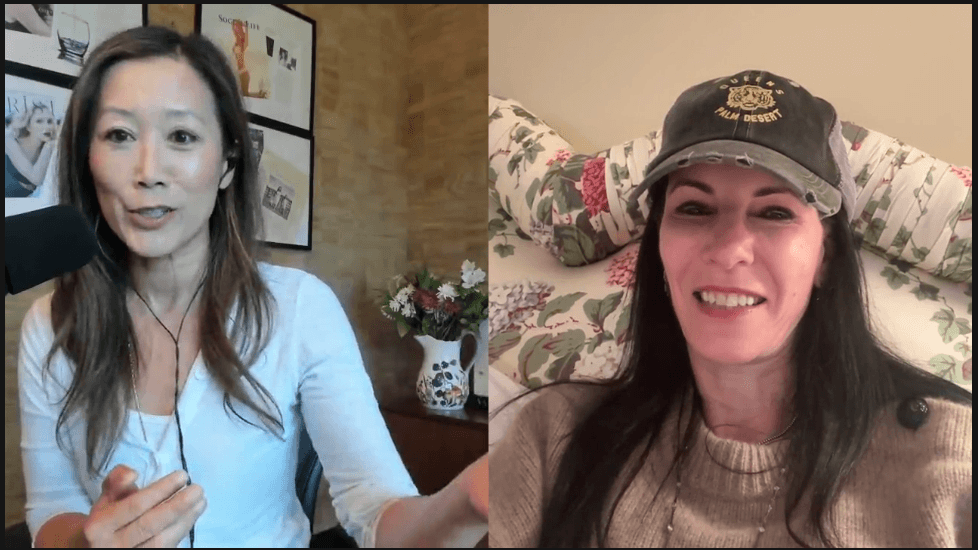
Sophia:
How do you handle not just rejection, but also opinions that maybe don’t make sense with your instinct—but you respect the person and their level of experience in a different realm?
At the end of the day, do you still just go with your gut?
Jill Kargman — 33:56:
Yes.
I don’t care what anyone says.
I do not.
I don’t care.
I’m called all kinds of horrible things online.
I don’t care.
I do not care.
We’re all going to die.
I focus on my family and my friends, and I don’t give care what anyone says. Whether it’s a Jew hater on Instagram or whatever, I don’t give a f—
But there were chapters in my career where an agent, for example, said, “Don’t write about moms. That’s boring. That’s not sexy. That’s a niche.”
And I said, “Well, that’s an awfully big niche.”
And I ignored her.
She has way more experience.
But then I wrote Momzillas, and that book was in 14 languages.
Then there was a whole “mom lit” trend that I was part of. She couldn’t really foresee that. She thought moms were a niche and that it was asexual and boring. But it turned out she was wrong.
And I had to just trust myself.
So you can listen and be open-minded, but take it with a grain of salt.
You have your own rudder.
Sophia — 35:04:
It seems to me from your work that you’re so observant, and therefore there’s probably so much you feel compelled to say in the different ways that you express yourself.
How much of your work is also shaped by what you think an audience wants to hear?
Jill Kargman:
None of it.
None of it.
I think I often say what people don’t want to hear.
What Shapes Us? Genetics, Environment, Habits, and Agency — 36:22
Sophia:
I’ve been asking what shapes us and how we can age well.
I grew up around doctors. My father was one. My brother became one. My parents hoped I would become one.
And the message I absorbed was that most of our bodies, our health, our lives, our personalities are predetermined by genetics. I acknowledge that a lot of it is predetermined.
But what’s been a delightful surprise as an adult is to realize that I have a lot more agency than I was ever led to believe—over my body, my health, my mindset, my life. Gaining influence over all that I can influence has required me to become a lot more conscious of unconscious patterns.
Eating habits I adopted from my parents.
Work ethic from people I admired.
Expectations I didn’t know I’d absorbed from the culture around me.
Noticing them was slow work. But noticing each unconscious pattern provided me with the opportunity to choose consciously.
When I was young, looking at that photograph of Sophia Loren, it wasn’t just her beauty that mesmerized me. It was something in her face I couldn’t name then.
A kind of ease.
Like she’d figured out something that nobody had told me.
I’ve spent my whole life trying to learn what it was.
My eldest is now in college.
The next two are leaving sooner than I’d like.
I’m almost 54 years old.
I’ve never wanted that ease more than I do now—in my own body, in my own home, in myself.
If you want to keep going with me, there are two places.
The podcast is where I bring my questions to people who’ve spent their careers developing expertise I want to learn from. And sometimes it’s just me. What you heard today is a handful of the conversations I’ve recorded. There are several I haven’t played a word of.
Follow the podcast wherever you listen so the next one finds you. And Substack @ruanliving is where I share what Practical Nontoxic Living actually looks like in my life between episodes.
My goal is to make your next wise decision an easier one.
About Sophia Ruan Gushée
Sophia Ruan Gushée is the author of A to Z of D-Toxing: The Ultimate Guide to Reducing Our Toxic Exposures and founder of Ruan Living. For nearly twenty years, she has researched practical ways to reduce everyday environmental exposures and make wiser decisions amid uncertainty.
On the Practical Nontoxic Living™ podcast, Sophia talks with physicians, researchers, and people living the questions she doesn’t want to answer alone—exploring what shapes the environment around us, the biology within us, and who we’re becoming. Learn more about the philosophy: Practical Nontoxic Living™.
If you’re curious too, join us in wondering.