
40-Day Home Detox™ · Phase One of the Ultimate Home Detox™
Transform your home. Transform the patterns that shape your biology.
A one-year guided experience in Practical Nontoxic Living™, drawn from nearly two decades of research and practice.
Because the decisions that shape your home—and your biology—don’t all happen at once.
The Ultimate Home Detox begins with the immersive 40-Day Home Detox and continues through a year inside D-Tox Academy™—trusted guidance as life presents new decisions.
The LOLA POP email series is a free seven-day introduction to the detox method that powers the 40-Day Home Detox. Most readers begin here.
Already familiar with the program? Apply for the Ultimate Home Detox →
Ruan Living
The Ultimate Home Detox
One program. Two phases. One lasting transformation.
| → |
Phase One begins with the 40-Day Home Detox.
For forty days you’ll learn the LOLA POP Detox Method by applying it room by room, product by product, habit by habit. You’ll discover where your greatest opportunities lie, replace what matters most, and build the personal playbook you’ll use for years.
Why the Ultimate Home Detox?
Your home shapes your biology every day.
Not through dramatic events. Through ordinary ones.
The air you breathe.
The products you use.
The food you prepare.
The routines you repeat.
Decades of peer-reviewed research have shown that these everyday exposures can interact with biological systems involved in hormones, reproduction, biological aging, gene expression, and the health of future generations.
The science is becoming increasingly clear. Yet knowing the science rarely changes how we live.
What has been missing is a practical way to translate decades of research into everyday decisions. That’s why I created the Ultimate Home Detox. Not as another detox challenge. As a structured practice for Practical Nontoxic Living—helping you intentionally shape the environment that shapes you.
The journey begins with the 40-Day Home Detox, where you’ll learn the patterns that matter most. It continues inside D-Tox Academy, where you’ll keep refining your home as your life, your family, and the science evolve.
Forty days create momentum.
A year builds a practice.
A lifetime changes how you think about home.
The Ultimate Home Detox isn’t designed to change your home once.
It’s designed to influence thousands of decisions you’ll make over the coming years—from everyday purchases to major renovations, changing health priorities, and new stages of family life.
Turning Research into Daily Practice
Evidence and media attention have not been scarce. You have probably encountered plenty of warnings, articles, podcasts, products, and ingredients to avoid.
What has been missing is something else—strategies to navigate conflicting information and misleading marketing claims for less toxic purchases, a less toxic home, and a less toxic life.
Too much information.
No way to prioritize.
No strategy to simplify nontoxic living.
The 40-Day Home Detox exists because awareness without a method for change goes nowhere.
The Research
The Science of Everyday Exposures
Many toxic exposures from the materials, products, and routines inside ordinary homes are invisible. They are built into products we trust. Into habits we rarely question.
Compared to families before the Industrial Revolution, we live with an abundance of affordable benefits and conveniences our great-grandparents never enjoyed: prepackaged foods and beverages with long shelf lives; diverse cleaning products; innovative cosmetics, skincare, and personal care products; accessible interior design through our more affordable interior furnishings; life-changing electronics; and infinitely more things. These brilliant inventions are integral to our modern lives. They also created new sources of toxic exposures.
These exposures are small.
They can accumulate in your home and body.
They matter.
Even Tiny Doses of Certain Exposures Can Interact with Our Biology
Some compounds have been shown to produce biological effects at concentrations measured in parts per trillion—roughly one drop of water in twenty Olympic-size swimming pools. At such low levels, fetal exposure to estrogenic compounds has been associated with permanent developmental changes in animal studies. In one foundational study, low doses produced effects that higher doses did not—a reminder that with some compounds, the dose does not behave the way we intuitively expect (vom Saal et al., 1997).
A growing body of human research is investigating effects from real-life exposures to bisphenols, phthalates, and other compounds with estrogenic activity—compounds found in a wide variety of consumer products. But research can only move so fast. The Endocrine Society estimates that 1,000 or more manufactured chemicals may be endocrine disruptors, and most will never be individually studied—nor will the cocktail effects of the mixtures we encounter in real life.
Researchers are studying associations between EDCs and reproductive health, development across the lifespan—from the prenatal period through childhood, adolescence, and menopause—sleep, gene expression, biological aging, and transgenerational effects.
Three Findings That Signal a Wider Pattern
 |
More than 51% Global decline in mean sperm concentration between 1973 and 2018, with environmental chemical exposures among the contributing factors researchers are studying (Levine et al., 2023). 5–10 years Estimated cumulative cost of biological aging from environmental pollutants and lifestyle factors combined (Mesnage, 2025). 3 generations Effects documented across three human generations—children and grandchildren—in the cohorts of women prescribed diethylstilbestrol (DES), a synthetic estrogen given to pregnant women from the 1940s to the 1970s (Titus-Ernstoff et al., 2010). Research continues on epigenetic inheritance and other exposures (Nilsson et al., 2022). |
Body Burden—A Record of What We’ve Encountered
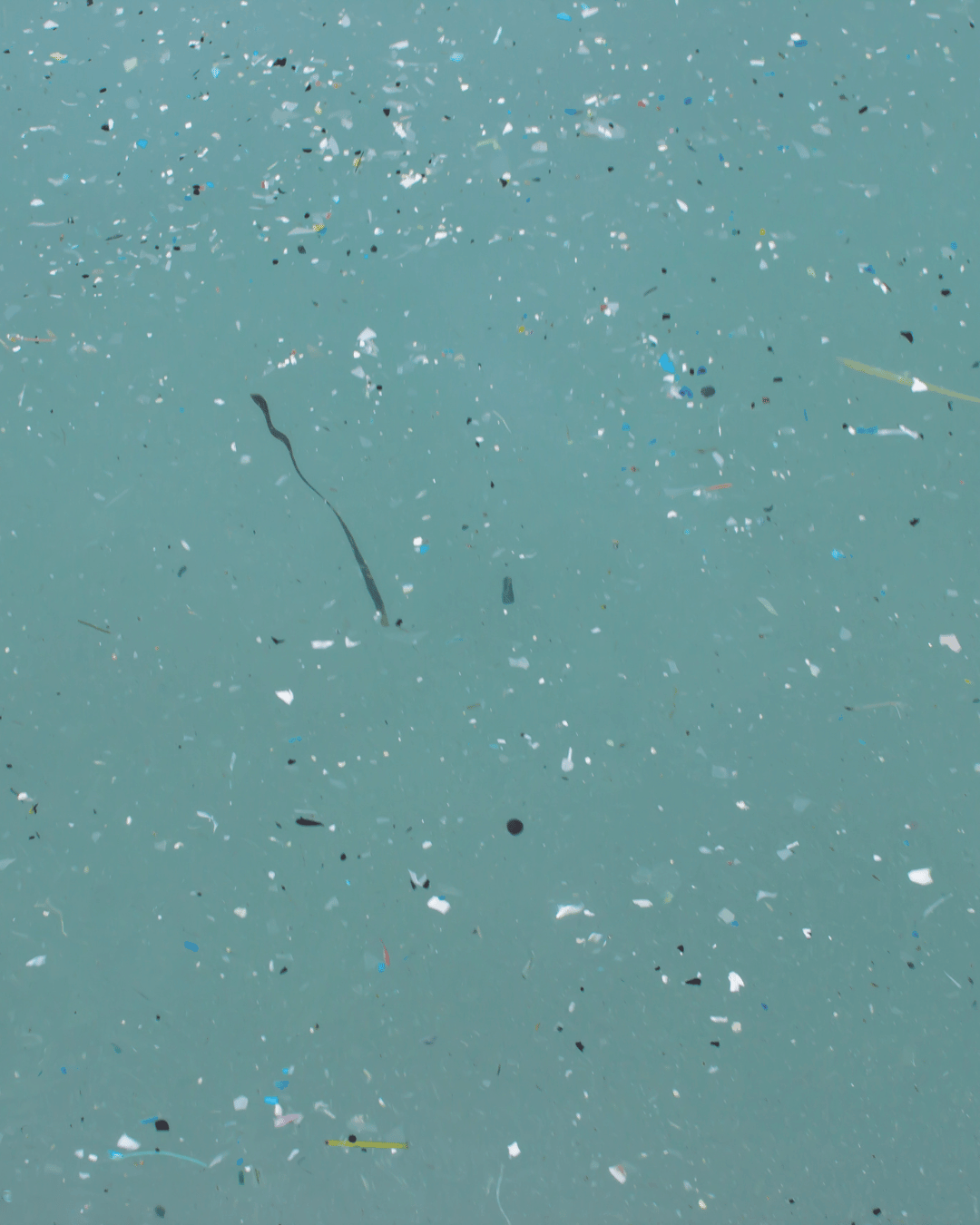 |
287 chemicals detected in the umbilical cord blood of 10 newborns born in U.S. hospitals in a study of industrial pollutants present at birth (Environmental Working Group, 2005). More than 97% of Americans have detectable levels of “forever chemicals” (PFAS) in their blood (CDC, National Report on Human Exposure to Environmental Chemicals). 39,000–52,000 microplastic particles estimated to be consumed annually through food and inhalation in the U.S., depending on age and sex, with bottled water adding tens of thousands more compared with tap water (Cox et al., 2019). |
These findings are illustrative, not exhaustive. The research base is wide, sometimes deep, and continues to evolve. In the meantime, where the evidence is established, the 40-Day Home Detox is proactive about reducing known toxicants—lead, phthalates, pesticides, formaldehyde, arsenic, and other toxic compounds (including endocrine disrupting chemicals and heavy metals)—present in ordinary homes through everyday products, materials, food, and water. Where the science is still underway but the evidence is suggestive, 40-Day Home Detox takes a precautionary approach—choosing safer alternatives when they are practical and enjoyable to live with.
THE TRUTH IS
Some hormone-disrupting chemicals can begin leaving your body within hours.
The research is also encouraging. It shows that when certain exposures are reduced, the body responds, though the timeline varies by compound. For compounds with short half-lives—phthalates, BPA, certain pesticides—the body can eliminate some of them within days (Rudel et al., 2011; Lu et al., 2006; Fagan et al., 2020). For others, like heavy metals and PFAS, the timeline is longer (Olsen et al., 2007; ATSDR, 2020)—and for these, reducing your exposure is the meaningful intervention.
The challenge has never been whether to reduce toxic exposures. It has been knowing which to reduce, in what order, and how to do it without dismantling your life.
The 40-Day Home Detox gives that knowledge a method, an order, and a pace you can live with—a sustainable practice, and a meaningful investment in your healthspan.
How the Science Becomes Daily Practice
Research tells us what matters.
The 40-Day Home Detox teaches you what to do next.
Over forty days you’ll move through your home one decision at a time. You’ll learn to:
- • identify your Household Repeat Offenders™
- • prioritize what matters most
- • replace products strategically—not all at once
- • build habits that become second nature
- • create a personal playbook you’ll use for years
Because transformation doesn’t come from reading another study. It comes from making better decisions every day.
Why Plastics Get the Most Attention
Plastics are woven into nearly every part of a modern home and our daily routines.
They do not break down quickly. Some types fragment into ever-smaller pieces over decades—small enough to inhale and ingest without our noticing.
Studies have found both microplastics—pieces that can be as large as a pencil eraser or as small as a grain of salt—and nanoplastics, which are smaller still, throughout the human body. Nanoplastics are small enough to cross biological barriers, like membranes, a larger particle could not.
A 2024 peer-reviewed scoping review found that microplastics have been detected in 8 of 12 human organ systems—including the cardiovascular, digestive, endocrine, integumentary, lymphatic, respiratory, reproductive, and urinary systems—as well as in breast milk, meconium, semen, stool, sputum, and urine (Roslan et al., 2024). Other studies have detected microplastics in human blood (Leslie et al., 2022) and placenta (Ragusa et al., 2021), and in carotid artery plaques, where their presence was associated with a higher risk of cardiovascular events compared with plaques where none were detected (Marfella et al., 2024, NEJM).
Health implications and elimination pathways in humans remain under study. Source reduction is on firmer ground. Indoor air and dust carry microplastics shed from synthetic textiles, plastic furnishings, and degraded plastic products (Dris et al., 2017; Zhang et al., 2020). Reducing plastic in the home is a commonsense way to reduce the microplastics in the air your family breathes, the dust they touch, the food they eat, and the water they drink.
This is why the 40-Day Home Detox dedicates the most days to plastics—one of the program’s six Household Repeat Offenders™.
The Scale of the Unknown
Since World War II, the number of chemicals in commercial use has grown dramatically, and roughly 2,000 new ones enter U.S. commerce each year. Only a small fraction have been studied for how they affect human health. What remains is less a list of proven hazards than a large and growing set of unanswered questions—substances woven into daily life whose long-term effects on the body are not yet understood.
How Much of the TSCA Inventory Has Been Restricted or Evaluated
|
Restricted 5 chemicals or categories under original TSCA, 1976–2016 |
Fully Evaluated 22 final risk evaluations completed under amended TSCA, 2016–2026 |
Out of 86,862 on the EPA’s TSCA Inventory
| 62,000 grandfathered (1982) | ~25,000 added since |
Sources: U.S. EPA—TSCA Inventory (2025); About the TSCA Inventory; Section 6(a) Regulations; Completed Risk Evaluations (2026)
Tens of Thousands of Chemicals.
Only Dozens Evaluated For Health Risks
86,862
chemicals listed on the EPA’s Toxic Substances Control Act (TSCA) Inventory (US EPA, 2026).
2,000
new chemicals entering U.S. commerce each year (California DTSC, n.d.).
7
new chemicals enter a day (California DTSC, n.d.).
22
have ever completed full EPA risk evaluation under TSCA (as of May 2026), or approximately 1 in 3,948 (U.S. EPA, 2026).
“Generations of children are being born prepolluted.”
Rayasam et al., 2022
A Calmer Way Forward
You Don’t Need to Know Everything.
You don’t need to memorize tens of thousands of chemicals, decode every label, or spend your nights researching what belongs in your home.
You need a way to know what to do next.
The 40-Day Home Detox gives you that way: a sequence, a method, and a pace that turn overwhelming research into practical decisions you can actually live with.
Less guessing. Less spiraling. More clarity about the next right step.
What Ruan Detox Warriors™ Are Saying
Everyone who completes the 40-Day Home Detox earns the title Ruan Detox Warrior. More than a name, it represents the commitment, informed intuition, and mindset transformation they’ve achieved through the inner work of detoxing their homes—and their lives—with Ruan Living’s 40-Day Home Detox experience.
“
The 40-Day Home Detox program is an excellent program. It was a great introduction to harmful ingredients in conventional products.
- Wellness Seeker
“
In a month’s time I was able to completely overhaul my products with confidence that the new ones I chose were vastly less toxic. The 40-Day Home Detox was vital in my pursuit of health and wellness for myself and my family.
- Former Investment Banker
“
Ruan Living’s 40-Day Home Detox has really made me look at products differently. I love that I can now go shopping and make more informed decisions. I feel empowered. I loved the masterclasses and all the supplemental content like the readings and suggestions for helpful websites and apps.
- Health Editor
“
FIVE STARS!
- Ruan Detox Warrior
Individual experiences vary; results are not typical or guaranteed.
Why It Works
Three Unique Dimensions of the 40-Day Home Detox
1. Based on science, designed by real life
The foundation of every part of the program is peer-reviewed research and authoritative institutional sources—drawn from PubMed-indexed studies across toxicology, reproductive health, pregnancy outcomes, epigenetics, the Developmental Origins of Health and Disease (DOHaD), and healthspan, with whatever adjacent science the work has required. But research alone does not produce a program a real person can use.
The 40-Day Home Detox is also the distillation of nearly two decades of a mother’s lived practice—raising three daughters and three dogs in NYC, renovating an apartment, building a home, onboarding her husband, and making the dozens of small choices a household makes in a day—with the science in one hand and the realities of modern life in the other.
What is in the program is what has survived that constraint. The accessible, impactful changes an average head of household can actually make. The program is the distillation of that work.
2. Engages your senses to rewire your patterns
Unconscious routines are rewired by a structured experience that meets the same material from multiple angles, day after day, until what was once invisible becomes obvious—and what was once automatic becomes a choice. The program reaches you through:
- • Three private strategy sessions with Sophia Ruan Gushée. Meet at the beginning to personalize your plan, midway to overcome obstacles, and at the end to design the next stage of your Practical Nontoxic Living journey.
- • Daily audio messages
- • Video lessons
- • Workbooks (digital and printed)
- • Hands-on scavenger hunts
- • Masterclass instruction
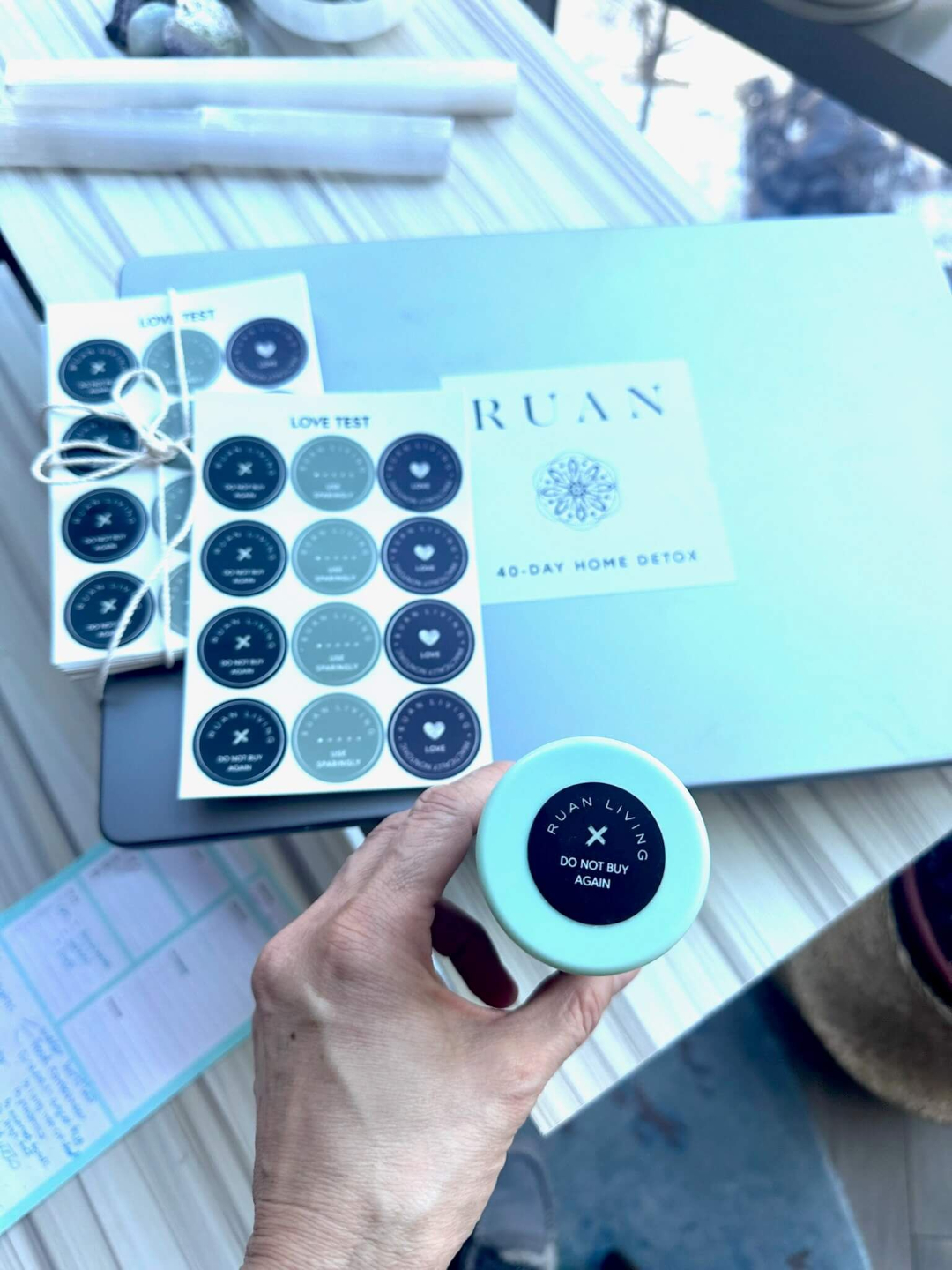
- • Love Test Detox Stickers
- • The Ruan Living app
- • The 40-Day Home Detox Kit
The LOLA POP™ Detox Method is the practice the program uses to do the rewiring.
3. What stays after the forty days are over
In the most meaningful ways, Day 40 isn't the end. It's the beginning.
Over forty days, you haven't just detoxed your home. You've changed how you make decisions. That shift keeps working for you long after the program ends.
Four things ensure the benefits continue to grow:
01. Your Practical Nontoxic Living playbook.
Customized throughout your forty days, your lifelong reference becomes the record of what you've learned: your baseline, your vetted products, your priorities, and the decisions that matter most. It continues evolving as your home and life evolve.
02. The LOLA POP™ Detox Method.
Thirty consecutive days of practice transform a framework into a habit. The more often you use the LOLA POP™ Detox Method, the more automatically—naturally—you begin evaluating products, materials, and routines.
03. What you cannot unsee.
Once you learn to recognize the six Household Repeat Offenders™, you begin seeing them everywhere.
In your home.
In stores.
In hotels.
On airplanes.
In your children's schools.
The lens doesn't turn off—and that's what makes Practical Nontoxic Living become a way of life instead of another wellness project.
04. Twelve months in the D-Tox Academy.
Your forty days prepare you for what comes next.
Life keeps presenting new decisions: a move, a new sofa, a nursery, changing science, new products, new technologies.
Instead of starting from scratch, you return to one trusted place where I've already done the research, weighed the tradeoffs, and translated it into practical guidance you can use immediately.
Throughout the year, you'll deepen your Practical Nontoxic Living across ten pillars—from cleaning, kitchens, and personal care to EMFs, interior design, fashion, babies, children, and more. You'll receive continually updated Ruan Living Shopping Guides, monthly Practical Nontoxic Living Roadmaps, exclusive workshops, and a growing library of trusted guidance designed to make every future decision simpler, faster, and more informed.
The forty days transform your home. The D-Tox Academy helps you navigate everything that comes after. Because there is always a next decision—and it should be easier than the last.
The Science of Rewiring Patterns
Designed Around How Lasting Change Happens
I designed the 40-Day Home Detox across almost twenty years of Practical Nontoxic Living practice and refinement—before I encountered much of the behavioral change research that would later converge with what I had already built. Several principles for how lasting change happens run through my program and the LOLA POP™ Detox Method. Three are anchored in the work of leading researchers, and each helps explain how the program can work.
Make each step easy and desirable.
BJ Fogg’s work at the Stanford Behavior Design Lab centers on three ways change sticks: it is easy enough to need little motivation, prompted by something you already do, and followed by a positive feeling that tells the brain to repeat it. It is why the 40-Day Home Detox works in small daily shifts—in as little as five to fifteen minutes, anchored to your existing routines, and built around celebration—so change settles in instead of riding on motivation that comes and goes.
Notice before you change.
Judson Brewer, a psychiatrist and neuroscientist who directs research and innovation at Brown University’s Mindfulness Center, studies how willpower-based change tends to fall short—and how observing a habit without judgment can loosen automatic, repeating patterns. When you pay attention to what a habit can cost you—say, endocrine disruptors in your body lotion—the brain can lose desire for it. The LOLA POP™ Detox Method begins with this kind of observing, not forcing, so a safer alternative can become your preference.
Practice with the whole body, not only the mind.
The late James Doty—neurosurgeon and founder of Stanford’s Center for Compassion and Altruism Research and Education—taught that reading or hearing about a change engages the mind narrowly, while practicing it across several senses makes it far more likely to take hold. Writing it, seeing it, doing it, and returning to it leaves a stronger imprint than information alone. The 40-Day Home Detox Kit anchors this multisensory experience, repeated across the thirty-day Detox stage until the method becomes automatic.
These principles have been applied for years to fitness, productivity, and stress. Reaching them independently, and applying them to reducing environmental exposures at the scale of a home, is part of what makes the 40-Day Home Detox its own kind of practice.
The Process
Discover. Detox. Design.
Three stages organize the program. Across forty days, you are personalizing your Practical Nontoxic Living playbook—the reference book that will hold your decisions, alternatives, priorities, and resources for the rest of your life.

Discover
Begin by cultivating awareness. A baseline assessment helps you observe symptoms and patterns now, so you have a meaningful reference point as you make changes. Workbook exercises bring unconscious routines into view—the products, materials, and habits that have been shaping your exposures without your noticing.
Detox
Apply the LOLA POP Detox Method—Learn, Observe, Love Test, Alternatives, Practical Wisdom, Observe, Peace—to the products and routines that matter most. The method holds joy and convenience alongside reduced toxic exposures, because requiring you to choose between them is not sustainable.

Design
Craft what you want your Practical Nontoxic Living to be going forward. With guidance from masterclass experts, you build your personal Practical Nontoxic Living playbook—the reference book you will return to for the rest of your life.
Designing Your Healthiest, Happiest Future
During the Design stage, you begin designing a home and lifestyle that align with your clarified values, priorities, and lived reality—supporting the healthiest, happiest future that you’re able to nurture for yourself and the family you love.
The Method Behind the System
The LOLA POP™ Detox Method
Most people trying to reduce toxic exposures fall into one of two patterns: they either ignore the issue, or they try to change everything and become overwhelmed.
What is missing is not information. It is a way to apply it.
The 40-Day Home Detox is guided by the LOLA POP Detox Method—a repeatable practice that helps you see your home, products, habits, and routines through a clearer lens.
Across seven days of free emails, you experience the method in action. You meet a product you’ve never thought to question—the perfect one to practice on, and the method you’ll learn works on everything.
You don’t need to memorize a thousand products. You need a few patterns—and the same lens works on the Household Repeat Offenders that turn up in room after room.
Hosting Lots of Bad Company
Household Repeat Offenders
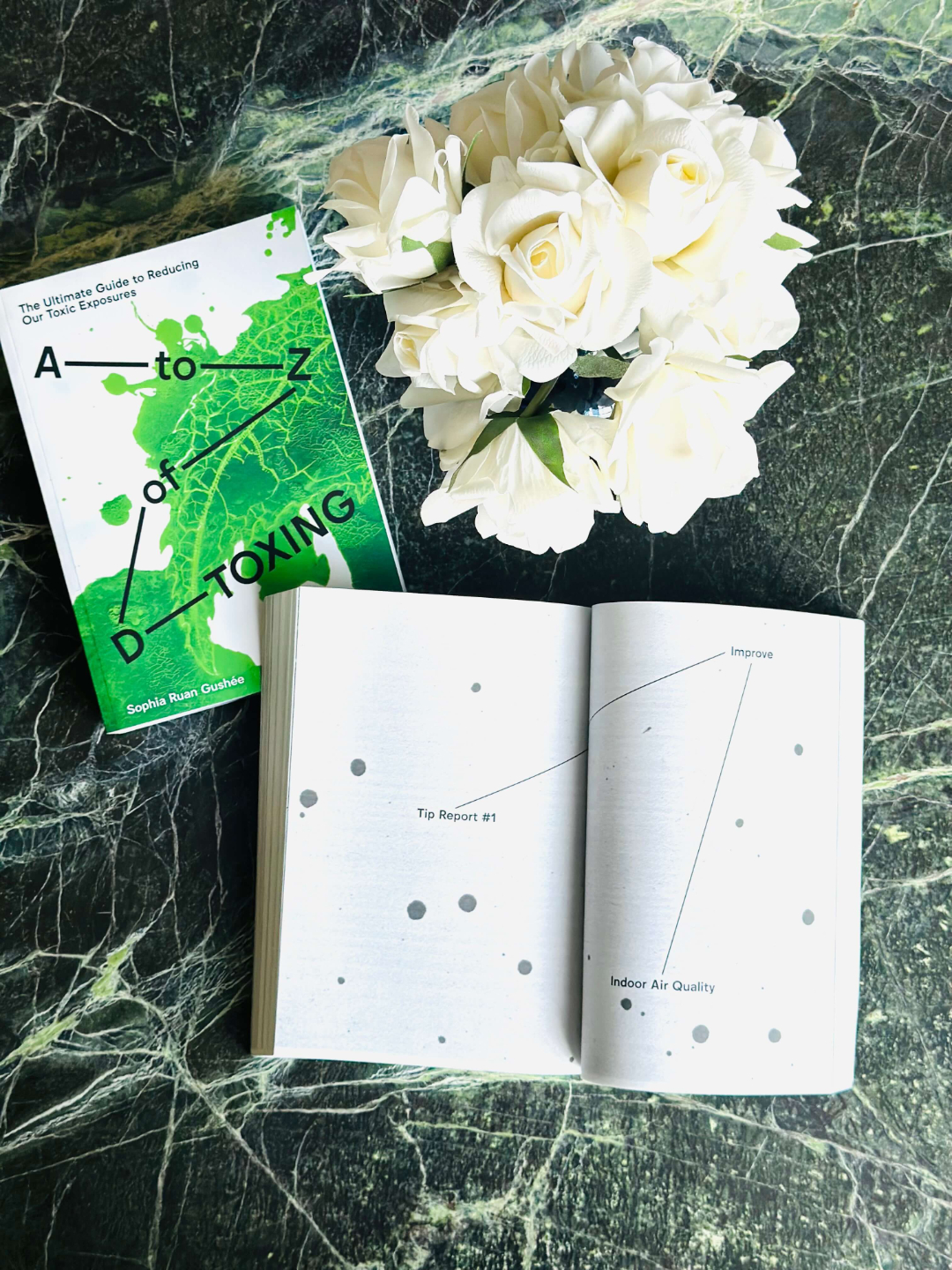
Exposure is usually shaped by products, materials, and routines we interact with every day—often without noticing. In my book A to Z of D-Toxing, I coined the term Household Repeat Offenders™ for the categories that most consistently shape exposure over time:
- • cleaning products
- • personal care and beauty products
- • food storage and packaging
- • cookware and kitchen materials
- • toys, art supplies, office supplies
- • mattresses, bed linens, bath linens, furniture, window treatments, carpets, rugs, and home finishes
- • fragranced products
- • everyday habits and routines
The challenge is not identifying these categories. It is understanding what matters most, what to prioritize, and what to change—and what not to worry about. This is where most people get stuck.
The 40-Day Home Detox targets six of the most common Household Repeat Offenders—cleaning products, self-care products, fragranced products, resistant chemicals, colored products, and plastics—and moves through them in the order that matters most.
For more on each category and how the LOLA POP Detox Method applies to each, see the full program details →
The masterclass expert conversations provide the connective tissue between awareness and designing your Practical Nontoxic Living—offering context, perspective, and lived insight to help you translate what you’ve learned into intentional choices for the future you’re shaping.
Wisdom from World-Class Experts
Six Masterclasses to Elevate Your Next Chapter
Design is where you widen your lens beyond products and habits—into a holistic view of your home, health, energy, and future.
You’ll receive six masterclasses from leaders across complementary fields:

Elissa Goodman Nutrition & Everyday Nourishment |

Shiva Rose Natural Beauty & Personal Care |

Robert Kiltz, MD Fertility & Reproductive Health |

Paul Magarelli, MD Endocrine Disruptors & Reproductive Endocrinology |

Deborah DiMare Healthy Interiors, Materials & Furnishings |

Heather Lilleston Mindful Living & the Meaning of Home |
For full descriptions of each masterclass, see the full program details →
The 40-Day Home Detox runs in cohorts throughout the year. Spots are limited. Application closing dates and cohort schedules are detailed on the application page.
Day 40 isn’t the finish line.
It’s the beginning.
Practical Nontoxic Living isn’t a challenge.
It’s a lifelong practice.
And the next decision can be easier than the last.
Phase Two
D-Tox Academy™
The 40-Day Home Detox changes how you see.
The D-Tox Academy changes how you live.
During your forty days, you learn the Practical Nontoxic Living™ method by applying it to the six Household Repeat Offenders™.
Then, for twelve months, the D-Tox Academy becomes your always-open research desk. As new products, new science, and new questions emerge, you return to one trusted place where I’ve already done the research, weighed the tradeoffs, and translated it into practical guidance you can use.
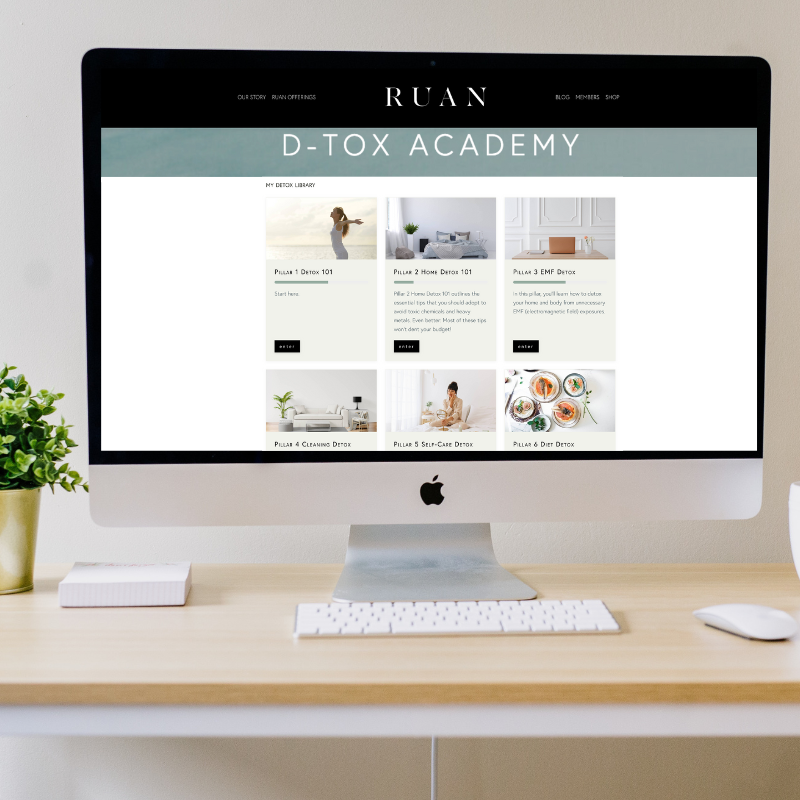
Inside the Academy, you continue refining Practical Nontoxic Living through ten detox pillars, monthly guidance, shopping guides, workshops, an evolving research-informed library, and a community of Ruan Detox Warriors learning alongside you.
This is where your transformation matures.
Is This For You?
Is This for You?
Some are preparing for fertility, IVF, or pregnancy after loss.
Some are navigating a recent diagnosis, an upcoming surgery, or a recovery period that has made environmental load suddenly relevant.
Some are caring for a child or aging parent whose health has become more vulnerable.
Some have simply chosen to take environmental and public health seriously as a healthspan input.
Whatever brought you here, the program is designed to welcome you wherever you are ready to start.
The 40-Day Home Detox runs in cohorts throughout the year. Spots are limited. Application closing dates and cohort schedules are detailed on the application page.
What Is Included
Your Guided 40-Day Experience Includes
- • Your 40-Day Roadmap—the visual structure for the program
- • Three private 60-minute video sessions with Sophia—at kickoff, midpoint, and completion
- • Forty days of daily audio and email guidance with Tweak/Stretch/Plunge engagement options
- • Ten Workbooks that become your personalized Practical Nontoxic Living playbook
- • Videos of Sophia inside her home, sharing her Practical Nontoxic Living approaches
- • Six masterclasses with named experts in complementary fields
- • The 40-Day Home Detox Kit—a curated physical kit assembled by Sophia. Retail value $1,500.
- • Twelve months of D-Tox Academy™ membership—your always-open research desk, with guidance, shopping guides, and community support to make future decisions simpler, faster, and more informed
- • Ruan Living app and portal access throughout the program
Your Investment
$5,500
A single payment. Cohort-based. Application-only.
About $15 a day for the year—and for the thousands of decisions it shapes long after.
The 40-Day Home Detox runs in cohorts throughout the year. Spots are limited.
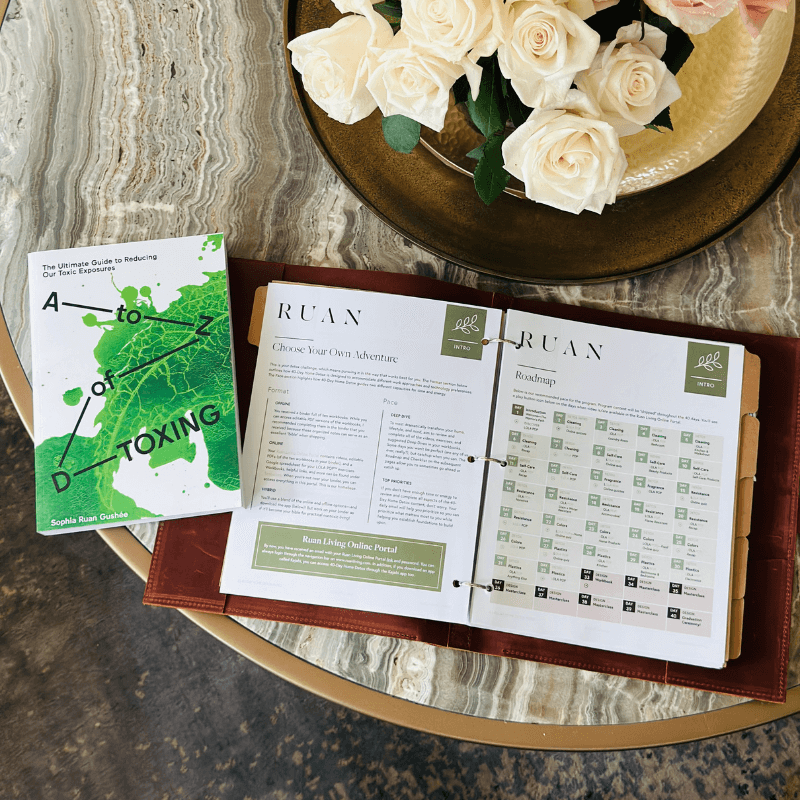
A tactile, multisensory anchor, the 40-Day Home Detox Kit includes a signed copy of A to Z of D-Toxing, your Practical Nontoxic Living playbook (ten printed workbooks in a custom binder), the Love Test Detox Stickers™, your 40-Day Roadmap, and the My Detox Playbook / My Healing Playbook workbook.
For the full description of what each element includes and how it works, see the full program details →
Change You Can Hold
Real change doesn’t come from information alone. By engaging your hands as well as your mind, the 40-Day Home Detox Kit reinforces daily practice, helping new habits take root and become second nature. Because the choices you repeat today help shape the future you live tomorrow.
For Practitioners and Clinical Partners
The 40-Day Home Detox functions as a clinical adjunct in functional, integrative, endocrine, healthspan, and reproductive medicine (including IVF, OB/GYN, fertility)—this home-and-habits intervention complements clinical protocols, biomarker testing, and preconception care.
Structured reporting and coordination with referring physicians can be developed in collaboration with Ruan Living, calibrated to each practice’s workflow and patient population.
Practitioners and partner organizations can email [email protected] with the subject line Practitioner Inquiry—40-Day Home Detox to learn more.
Created by Sophia Ruan Gushée
Why I Created the Ultimate Home Detox™
I’m a mother, author, and independent researcher who began studying environmental and public health in 2007 because a life I loved was at stake.
Shortly after bringing home my first daughter, I discovered concerning chemicals in infant products while reading a pediatrician’s book.
When I asked my father, an OB/GYN, and my brother, a radiologist, why doctors had not warned me, they both gave the same three-word answer:
There is no proof of harm.
The question that has guided my work ever since became:
What is the proof of safety to human health and development?
For nearly two decades, I’ve studied toxic exposure science, environmental health, Developmental Origins of Health and Disease (DOHaD), neuroscience, behavioral and habit science, psychology, epigenetics, healthspan research—and, equally important, what actually works inside a busy family home.
The Ultimate Home Detox™ distills that work into one clear, practical, step-by-step system designed to help you make better decisions with confidence—not through perfection, but through consistent, intentional practice.
As a mother of three, author, podcaster, and longtime practitioner of Practical Nontoxic Living™, I’ve learned that the healthiest choices are the ones real families can sustain. My work isn’t about accumulating more information. It’s about translating complex science into practical decisions that fit modern life.

Sophia Ruan Gushée in her kitchen with her three daughters.
Nothing about this is extreme.
And yet everything about it is profound.
Today, I’m the founder of Ruan Living and creator of the Practical Nontoxic Living™ framework, the Ultimate Home Detox™, and the D-Tox Academy™. I’m also the author of A to Z of D-Toxing, whose 916 scientific references—including 586 unique scientific studies—have been independently verified for their breadth and rigor. I hold degrees from Brown University and Columbia Business School and have served on the Brown University School of Public Health Advisory Council and the Well+Good Council.
Frequently Asked Questions
Is there research behind this approach?
Yes. The program draws on peer-reviewed research from environmental and public health, including studies in Environmental Health Perspectives, Environment International, Human Reproduction Update, Environmental Epigenetics, and Clinical Epigenetics.
Sophia’s A to Z of D-Toxing (916 works cited, 586 unique scientific references) was built across eight years of full-time research. The 40-Day Home Detox is the concentration of nearly twenty years of research, study, and practical wisdom that the book began.
Selected references are listed at the bottom of this page and throughout the 40-Day Home Detox program materials. Some areas of this research are well-established; others are mixed and evolving. The 40-Day Home Detox takes a precautionary approach where the evidence is suggestive and the cost of acting is low.
How is this different from other approaches to reducing toxic exposures?
Most approaches address the tip of the iceberg—a product to swap, a brand to switch, a category to avoid. The 40-Day Home Detox teaches you to dismantle the key sources of toxic exposures in your life so the work keeps shifting things meaningfully for years.
It is also designed by someone who has lived every stage where this matters most. Sophia developed Practical Nontoxic Living across nearly two decades—
while pregnant
while nursing
while raising three daughters from infancy through young adulthood
while renovating and designing two homes
while redesigning rooms from nurseries to toddler rooms to playrooms
while building a home from the ground up.
The program is the concentration of what survived all of that—what works inside a real life lived at the edge of the questions she was researching.
The result is a method—the LOLA POP Detox Method—that you can apply to any product, in any category, for the rest of your life. The method holds joy and convenience alongside reduced toxic exposures. You finish with your personal Practical Nontoxic Living playbook and a sustainable practice you continue to evolve.
Can I do this if I am already working with a physician?
Yes.
The program is designed to stand on its own and does not require physician collaboration. But sharing what you observe and what you change with a physician paying attention to environmental load can deepen the work on both sides. Functional, integrative, longevity, and fertility physicians are most often the ones who recognize the connection.
If accepted into a cohort, you and Sophia can discuss how to collaborate with your physician.
Can I do this for someone I love rather than for myself?
Yes. The program is designed for one accountable person, which benefits the household too. Whether you are doing this for yourself or for an adult child preparing for fertility, an aging parent, a partner navigating a diagnosis, or a future grandchild, the work is structured the same way—and the home that gets shaped by it is the one those people live in.
Early participants have observed something the program’s design anticipates but does not require: when one person begins doing this work seriously, others in the household often begin to notice and shift on their own. The household is not asked to change. The household responds to the change happening inside it.
The Love Test Detox Stickers, which are included in the 40-Day Home Detox Kit, also help intrigue your household members.
Is there a community I become part of?
Yes. Program participants and graduates are part of a community Sophia calls Detox Warriors—readers, listeners, and practitioners across her newsletter, podcast, and program who continue the work together.
How do I learn more before deciding?
The most useful next step is the free LOLA POP Detox Method email series. Over seven days, you learn the method that powers the 40-Day Home Detox—the practice of evaluating any product, in any category, for the rest of your life. The series applies the method to a product you have probably never thought to question; the product is the practice ground.
By the end of seven days, you have a clearer sense of whether the full program is the right next step.
Begin with the LOLA POP™ Detox Method →
Or, if you want operational depth: see the full program details →
You do not need to change everything.
You need a clear way to see what matters, make intentional decisions, and create a home that better supports your health, joy, and peace.
Your home shapes your biology. Learn how to shape your home.
Ready to Apply?
The 40-Day Home Detox is $5,500. A single payment. Cohort-based. Application-only.
If it’s the right next step for you but the investment would prevent you from participating this year, say so in your application. If you would benefit profoundly and contribute meaningfully to the community, I don't want price to be the obstacle.
Not ready? Two free email series are available.
Experience the LOLA POP method (7 emails) · Start with the Kickstart (10 emails)
Free 7-Day Email Series
Start With The Method.
Seven days to learn it. One product to practice on. A lens for life.
The 40-Day Home Detox™ is an educational program in environmental and public health. It is not medical advice and does not prevent, treat, cure, or diagnose any disease. Individual experiences vary.
Selected References
Click to expand the reference list
Agency for Toxic Substances and Disease Registry (ATSDR). Toxicological Profile for Cadmium. Atlanta, GA: U.S. Department of Health and Human Services, Public Health Service; 2012. Available at: https://www.atsdr.cdc.gov/toxprofiles/tp5.pdf. Authoritative U.S. government reference. Documents biological half-life of cadmium in the kidney as 6 to 38 years and in the liver as 4 to 19 years.
Agency for Toxic Substances and Disease Registry (ATSDR). Toxicological Profile for Lead. Atlanta, GA: U.S. Department of Health and Human Services, Public Health Service; August 2020. Available at: https://www.atsdr.cdc.gov/toxprofiles/tp13.pdf. Authoritative U.S. government reference. Documents lead storage in bone with a half-life of years to decades, in contrast to a blood half-life of approximately 28 to 36 days.
Calafat, A. M., Wong, L. Y., Kuklenyik, Z., Reidy, J. A., & Needham, L. L. (2007). Polyfluoroalkyl chemicals in the U.S. population: data from the National Health and Nutrition Examination Survey (NHANES) 2003–2004 and comparisons with NHANES 1999–2000. Environmental Health Perspectives, 115(11), 1596–1602. PMID: 18007991. NHANES 2003–2004 cycle. PFOS, PFOA, PFHxS, and PFNA detected in serum from over 98% of participants. Documented widespread human exposure to PFAS in the U.S. population.
California Department of Toxic Substances Control (DTSC). (n.d.). Emerging Chemicals of Concern. Retrieved May 2026, from https://dtsc.ca.gov/emerging-chemicals-of-concern/. States that about 2,000 new chemicals are introduced into U.S. commerce annually, at a rate of about seven new chemicals a day.
Centers for Disease Control and Prevention (CDC). National Health and Nutrition Examination Survey (NHANES). Per- and Polyfluoroalkyl Substances (PFAS) Biomonitoring Data. National Center for Health Statistics. Most recent update 2024. Retrieved May 2026, from https://www.cdc.gov/exposurereport/. Ongoing national biomonitoring program. Recent NHANES cycles have detected at least one PFAS compound in the serum of approximately 97% of Americans tested.
Corrosion Proof Fittings v. EPA, 947 F.2d 1201 (5th Cir. 1991). Federal appeals court decision vacating and remanding most of the EPA’s 1989 asbestos ban issued under the Toxic Substances Control Act.
Cox, K. D., Covernton, G. A., Davies, H. L., Dower, J. F., Juanes, F., & Dudas, S. E. (2019). Human consumption of microplastics. Environmental Science & Technology, 53(12), 7068–7074. PMID: 31184127. Estimated annual human microplastic consumption from food and inhalation at 39,000–52,000 particles, with bottled water adding tens of thousands more compared with tap water.
Dris, R., Gasperi, J., Mirande, C., Mandin, C., Guerrouache, M., Langlois, V., & Tassin, B. (2017). A first overview of textile fibers, including microplastics, in indoor and outdoor environments. Environmental Pollution, 221, 453–458. PMID: 27989388. Indoor airborne fiber concentrations (1.0–60.0 fibers/m³) substantially higher than outdoor concentrations (0.3–1.5 fibers/m³); approximately one-third of indoor fibers contained petrochemicals.
Endocrine Society. Common EDCs and Where They Are Found. https://www.endocrine.org/topics/edc/what-edcs-are/common-edcs.
Environmental Working Group. (2005). Body Burden: The Pollution in Newborns. Retrieved from https://www.ewg.org/research/body-burden-pollution-newborns. Study of umbilical cord blood from 10 newborns born in U.S. hospitals in August–September 2004. Of more than 400 chemicals tested, 287 were detected in cord blood, including pesticides, consumer product ingredients, and combustion byproducts. Small sample size.
Fagan, J., Bohlen, L., Patton, S., & Klein, K. (2020). Organic diet intervention significantly reduces urinary glyphosate levels in U.S. children and adults. Environmental Research, 189, 109898. PMID: 32797996.
Gore, A. C., Chappell, V. A., Fenton, S. E., Flaws, J. A., Nadal, A., Prins, G. S., Toppari, J., & Zoeller, R. T. (2015). EDC-2: The Endocrine Society’s Second Scientific Statement on Endocrine-Disrupting Chemicals. Endocrine Reviews, 36(6), E1–E150. PMID: 26544531. Comprehensive scientific statement reviewing evidence on endocrine-disrupting chemicals across obesity and diabetes, female and male reproduction, hormone-sensitive cancers, prostate, thyroid, and neurodevelopment.
Harley, K. G., Kogut, K., Madrigal, D. S., Cardenas, M., Vera, I. A., Meza-Alfaro, G., She, J., Gavin, Q., Zahedi, R., Bradman, A., Eskenazi, B., & Parra, K. L. (2016). Reducing phthalate, paraben, and phenol exposure from personal care products in adolescent girls: Findings from the HERMOSA Intervention Study. Environmental Health Perspectives, 124(10), 1600–1607. PMID: 26947464.
Larose, T. L., Greenfield, R., Dougan, M., et al. (2024). Environmental exposures influence multigenerational epigenetic transmission. Clinical Epigenetics, 16, 145. PMID: 39420431.
Leslie, H. A., van Velzen, M. J. M., Brandsma, S. H., Vethaak, A. D., Garcia-Vallejo, J. J., & Lamoree, M. H. (2022). Discovery and quantification of plastic particle pollution in human blood. Environment International, 163, 107199. PMID: 35367073. Plastic particles detected in 17 of 22 (77%) blood samples from healthy adult donors. First documentation of plastic particles in human blood.
Levine, H., Jørgensen, N., Martino-Andrade, A., Mendiola, J., Weksler-Derri, D., Jolles, M., Pinotti, R., & Swan, S. H. (2023). Temporal trends in sperm count: A systematic review and meta-regression analysis of samples collected globally in the 20th and 21st centuries. Human Reproduction Update, 29(2), 157–176. PMID: 36377604.
Lu, C., Toepel, K., Irish, R., Fenske, R. A., Barr, D. B., & Bravo, R. (2006). Organic diets significantly lower children’s dietary exposure to organophosphorus pesticides. Environmental Health Perspectives, 114(2), 260–263. PMID: 16451864. DOI: 10.1289/ehp.8418. Pilot study, 23 elementary school children. Median urinary concentrations of malathion and chlorpyrifos metabolites decreased to nondetect levels immediately after the introduction of organic diets and remained nondetectable until conventional diets resumed.
Marfella, R., Prattichizzo, F., Sardu, C., et al. (2024). Microplastics and nanoplastics in atheromas and cardiovascular events. New England Journal of Medicine, 390(10), 900–910. DOI: 10.1056/NEJMoa2309822. Prospective, multicenter observational study of patients undergoing carotid endarterectomy. Patients with microplastics and nanoplastics detected in carotid plaque had a higher risk of myocardial infarction, stroke, or all-cause death at nearly three years of follow-up compared with patients without microplastics detected. Methodology in this emerging field continues to develop.
Mesnage, R. (2025). Environmental health is overlooked in longevity research. Antioxidants, 14(4), 421. PMID: 40298664. Review article. The cumulative loss of healthy life years from environmental pollutants combined with lifestyle factors such as tobacco and alcohol “can conceivably reach between 5 and 10 years per person.”
Nilsson, E. E., Ben Maamar, M., & Skinner, M. K. (2022). Role of epigenetic transgenerational inheritance in generational toxicology. Environmental Epigenetics, 8(1), dvac001. PMID: 35186326.
Olsen, G. W., Burris, J. M., Ehresman, D. J., Froehlich, J. W., Seacat, A. M., Butenhoff, J. L., & Zobel, L. R. (2007). Half-life of serum elimination of perfluorooctanesulfonate, perfluorohexanesulfonate, and perfluorooctanoate in retired fluorochemical production workers. Environmental Health Perspectives, 115(9), 1298–1305. PMID: 17805419. DOI: 10.1289/ehp.10009. Twenty-six retired fluorochemical production workers, followed for 5 years. Geometric mean serum half-lives: PFOS 4.8 years; PFHxS 7.3 years; PFOA 3.5 years.
Ragusa, A., Svelato, A., Santacroce, C., Catalano, P., Notarstefano, V., Carnevali, O., Papa, F., Rongioletti, M. C. A., Baiocco, F., Draghi, S., D’Amore, E., Rinaldo, D., Matta, M., & Giorgini, E. (2021). Plasticenta: First evidence of microplastics in human placenta. Environment International, 146, 106274. PMID: 33395930. Twelve microplastic fragments detected in 4 of 6 placentas examined, identified on the fetal side, maternal side, and chorioamniotic membranes. Small sample size.
Rayasam, S. D. G., Koman, P. D., Axelrad, D. A., Woodruff, T. J., & Chartres, N. (2022). Toxic Substances Control Act (TSCA) Implementation: How the Amended Law Has Failed to Protect Vulnerable Populations from Toxic Chemicals in the United States. Environmental Science & Technology, 56(17), 11969–11982. PMID: 35980084. Source of the description of children being born “prepolluted” with chemical exposures that begin before birth.
Roslan, N. S., Lee, Y. Y., Ibrahim, Y. S., Tuan Anuar, S., Ku Yusof, K. M. K., Lai, L. A., & Brentnall, T. (2024). Detection of microplastics in human tissues and organs: A scoping review. Journal of Global Health, 14, 04179. PMID: 39175335. DOI: 10.7189/jogh.14.04179. Scoping review of 26 in-vivo human studies. Microplastics detected in 8 of 12 human organ systems including cardiovascular, digestive, endocrine, integumentary, lymphatic, respiratory, reproductive, and urinary, and in other biological samples including breast milk, meconium, semen, stool, sputum, and urine.
Rudel, R. A., Gray, J. M., Engel, C. L., Rawsthorne, T. W., Dodson, R. E., Ackerman, J. M., Rizzo, J., Nudelman, J. L., & Brody, J. G. (2011). Food packaging and bisphenol A and bis(2-ethylhexyl) phthalate exposure: findings from a dietary intervention. Environmental Health Perspectives, 119(7), 914–920. PMID: 21450549. DOI: 10.1289/ehp.1003170. Five families, 20 participants. Three-day fresh foods dietary intervention (no canned food, minimal plastic packaging). Geometric mean urinary BPA decreased 66%; DEHP metabolites decreased 53–56%.
Schmidt, C. W. (2006). Obstructing Authority: Does the EPA Have the Power to Ensure Commercial Chemicals Are Safe? Environmental Health Perspectives, 114(12), A706. DOI: 10.1289/ehp.114-a706. News feature examining the EPA’s limited authority to evaluate and regulate existing chemicals under the Toxic Substances Control Act, including the large number of chemicals grandfathered onto the Inventory and longstanding calls to reform the law.
Titus-Ernstoff, L., Troisi, R., Hatch, E. E., Palmer, J. R., Hyer, M., Kaufman, R., Adam, E., Noller, K., & Hoover, R. N. (2010). Birth defects in the sons and daughters of women who were exposed in utero to diethylstilbestrol (DES). International Journal of Andrology, 33(2), 377–384. PMID: 20002218. DOI: 10.1111/j.1365-2605.2009.01010.x. Self-reported birth defects in 4,029 sons and 3,808 daughters of women prenatally exposed to DES (third generation). Documents effects across three human generations through epigenetic transmission of in-utero exposure. A 2024 update from the National Cancer Institute (Titus et al., Cancers, PMID: 39061214) found little evidence of cancer risk in third-generation cohorts to date, though follow-up continues.
U.S. Environmental Protection Agency. (n.d.). About the TSCA Chemical Substance Inventory. Retrieved May 2026, from https://www.epa.gov/tsca-inventory/about-tsca-chemical-substance-inventory. The Inventory’s second version, published in 1982, contained about 62,000 chemical substances; it has since grown to more than 86,000.
U.S. Environmental Protection Agency. (2026). How to Access the TSCA Inventory (July 2025 Inventory update; page last updated March 19, 2026). Retrieved May 2026, from https://www.epa.gov/tsca-inventory/how-access-tsca-inventory. The July 2025 Inventory lists 86,862 chemical substances, of which 42,578 are active in U.S. commerce.
U.S. Environmental Protection Agency. (2026). Ongoing and Completed Chemical Risk Evaluations under TSCA. Retrieved May 2026, from https://www.epa.gov/assessing-and-managing-chemicals-under-tsca/ongoing-and-completed-chemical-risk-evaluations-under. As of May 2026, the EPA had completed a final risk evaluation for 22 existing chemicals.
U.S. Environmental Protection Agency. (2026). Regulation of Chemicals under Section 6(a) of the Toxic Substances Control Act. Retrieved May 2026, from https://www.epa.gov/assessing-and-managing-chemicals-under-tsca/regulation-chemicals-under-section-6a-toxic-substances. Documents Section 6 actions on existing chemicals, including the PCB prohibition (final rule May 31, 1979; 44 FR 31542) and the 1989 asbestos rule (54 FR 29460).
vom Saal, F. S., Timms, B. G., Montano, M. M., Palanza, P., Thayer, K. A., Nagel, S. C., Dhar, M. D., Ganjam, V. K., Parmigiani, S., & Welshons, W. V. (1997). Prostate enlargement in mice due to fetal exposure to low doses of estradiol or diethylstilbestrol and opposite effects at high doses. Proceedings of the National Academy of Sciences, 94(5), 2056–2061. PMID: 9050904.
Zhang, J., Wang, L., & Kannan, K. (2020). Microplastics in house dust from 12 countries and associated human exposure. Environment International, 134, 105314. PMID: 31756678. House dust samples from 12 countries analyzed for PET and polycarbonate microplastics. PET concentrations ranged from 37 to 120,000 µg/g, attributed primarily to textile fibers (65%) and packaging materials (30%).
Additional references on healthspan, biological aging, and environmental exposures available on request.
Ruan Living offers education in environmental and public health. It is not medical advice and does not diagnose, treat, cure, or prevent any disease. Individual experiences vary. Learn more.