When Is Mold in Your Home a Health Problem? Michael Rubino Explains
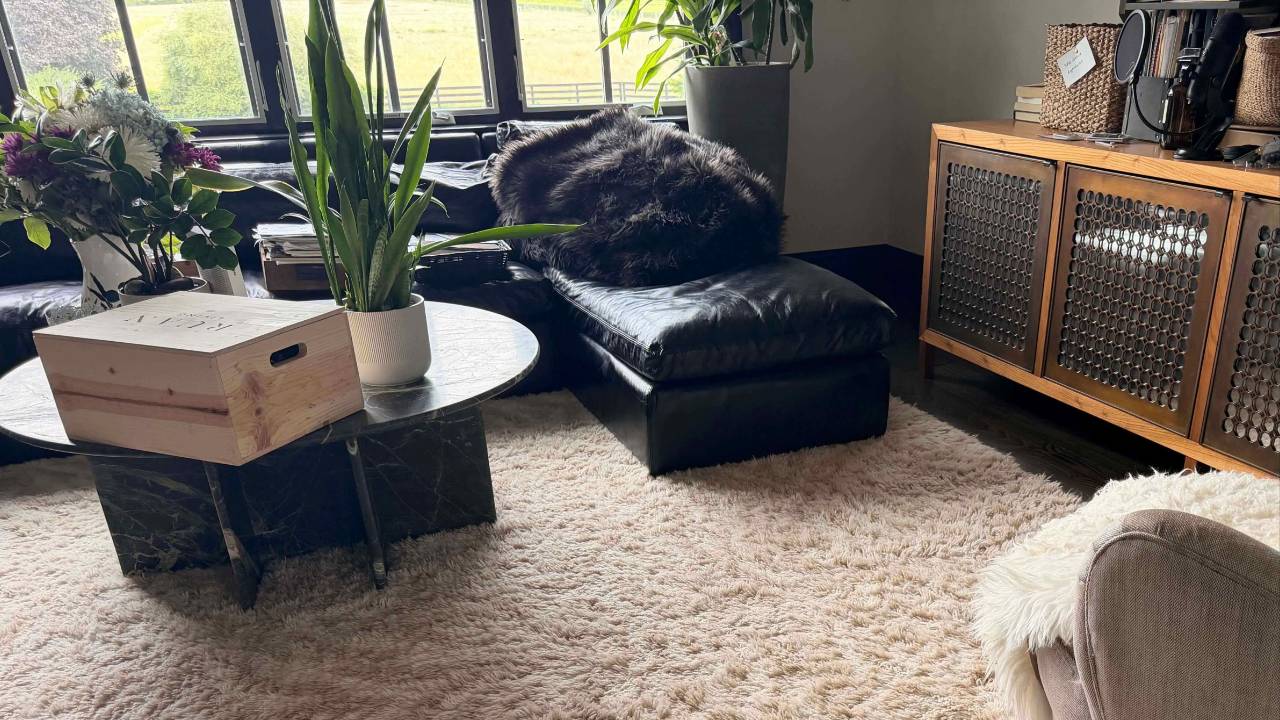
Oct 27, 2026Four years ago, a flood in our country home led to an inconvenient discovery: there was substantial mold in the custom rug in my home office.
I'm embarrassed to admit that the rug is still there.
Meanwhile, I sometimes experience congestion, itchy eyes, and brain fog after spending hours in the office. Those symptoms seem to disappear when I'm elsewhere. Could mold be contributing? I don't know.
This year, your questions about mold motivated me to investigate.
Can mold hide without a musty smell? Is black mold necessarily dangerous? When should you test your home? And how do you know whether professional remediation is necessary?
To explore these questions, I invited Michael Rubino, founder of HomeCleanse and author of The Mold Method, onto Episode 137 of the Practical Nontoxic Living podcast.
Our conversation left me feeling less overwhelmed and more prepared to confront what I've been avoiding.
If you've wondered whether mold might be a problem in your home, I hope this episode helps you approach the question with greater knowledge, curiosity, and confidence.
Listen to Episode 137 below, followed by the full transcript.
Why I've Avoided Confronting Mold in My Home
Introduction
Sophia Ruan Gushée [0:00] Mold is one of those topics that I have wanted to ignore and be in denial of. And this is how bad it is. In about 2022, my country home was flooded. There was lots of water damage and we had to get the insurance company involved in addressing the water damage. The insurance company required a mold inspector to come evaluate the home. And we had a big project, lots to fix. A lot has been fixed. But one thing I learned, a very inconvenient truth, is that my custom rug in my home office had lots of mold in it. And I still have the rug.
Right now, it's 2026. It's about 4 years later. Every time I'm in my home office, I don't feel that great. I get congested. My eyes get itchy. My lungs kind of get irritated. And I feel it cognitively, too. It's just It was a custom rug. I like it. I don't want to get rid of it. It's under a lot of heavy furniture, including a very heavy marble or stone looking coffee table and sofas.
But after talking to Michael Rubino, the guest of today's episode, I am reconsidering. And it's because of you. I have to thank you for the questions that you keep sending in about mold. Many of you are wondering, "Is mold in my home? Is mold making me sick? What should I do if I find mold?" And if you see black mold, is it always dangerous? Your questions are why I finally sought a mold expert to come onto the podcast and help me learn more about the health risks of staying in denial about the rug that's in my office and finally feeling brave enough to just confront mold. I know it's a very important issue. This episode, we're going to learn a common sense framework to think about mold in our home and how to manage it in a way that's not overwhelming.
As I said earlier, Michael Rubino is this episode's guest. Michael is the founder of Home Cleanse and is the author of a new book, The Mold Method. He's been remediating mold since 2012 and he often works alongside the physicians of his clients as the physicians work with the clients to treat symptoms of mold. I begin our conversation by asking Michael given his many years of experience when he walks into a home what does he look for? Does he smell for something? Is he touching walls or wet areas? So that we can also develop a common sense approach informed by his professional expertise.
It turns out he isn't looking for black spots. He's not necessarily looking for just a musty smell. Mold doesn't always smell.
I also ask him why the most common mold test can miss almost everything. And what he'd say to someone like me who knows exactly what's in her office and still hasn't done anything.
I left this conversation less afraid.
The rug is still in my office—for now. If you want to follow my journey on dealing with mold in my home and following up on the steps that Michael recommends, then follow me on Substack @ruanliving. You'll find the link and Michael's work in the show notes. So, let's dive right in and let's explore when is mold in our home actually a health problem.
Sophia Ruan Gushée [3:39] I'm very excited to talk to you because I actually discovered you online about a year or two ago when I was trying to learn more about mold for some reason. And I definitely have been very resistant to facing the mold issue because I don't want to open up a very expensive can of worms.
But I remember really appreciating your website and I was just looking at home cleanse.com again this morning. It was filled with so much helpful information. I think it is even more helpful than when I looked at it a year or two ago. So, I highly encourage listeners to visit homecleanse.com to learn more about your basic questions about mold and be introduced to issues that you haven't even thought about. And I ask this as a way for the average person to feel like they also have a common sense framework to evaluate their home.
Where Can Mold Hide in Your Home?
Michael Rubino [4:44] Yeah. So the first thing that you need to know is that it's not necessarily looking for mold. You don't find mold by looking for mold because a lot of times mold is hidden behind a wall uh because of a window leaking or it's hidden in an attic space because a roof is leaking or in a you know a cabinet underneath a sink somewhere in an HVAC system, right? And so unless you know to specifically look for these things, odds are you're going to miss it. And I think that's what happens with so many people is they go in and they're looking for some sort of odor, which of course mold can produce an odor, doesn't doesn't always produce an odor. Or they're looking for, you know, the black stuff growing on the wall. And of course that can happen, but it doesn't always happen, right? And so
[5:31] I think that's one of the biggest things. So, when I first go to a home, I actually walk outside first, and I'm looking at the doors, the windows, how they're installed, if there's any flashing, which are basically like these pieces of, you know, metal that have edges depending on the type of window or door installation. You're looking to see if they're windows are well sealed, if there's any condensation developing on them, you know, and I I kind of start there. I'm also looking at the topography. How is the grading is the grading towards the house? meaning every time it rains that water is running into the house. Um, I'm looking at any sort of cracks in the exterior, gaps in the exterior, anything where water can get in. And then I'm looking at the roof.
[6:15] Does the roof have proper flashing? How do the connections because a lot of people don't realize this, but every sink, every shower is going to have a vent pipe that pushes out to the roof. Well, there's what's called boots that go over those caps to prevent water from getting in. So, I'm going to look at those because those break down over time. How do those look? What's the condition of those? Are they installed properly? Um, is the shingle missing somewhere or is the the roof in good condition? I mean, so I'm looking for what are the weak points where water could get in and create mold? And um, you know, doing that outside first makes a lot of sense because you have a lot of water intrusion that can come in from the exterior.
Then I go inside and I'm looking at other troubled spots like kitchens and bathrooms, HVAC units around the interior side around windows, around doors, um, and looking for these subtle signs of water intrusion. So, I hope that helps.
Does Mold Always Have a Musty Smell?
Sophia Ruan Gushée [7:09] That does. I've heard you talk about a smell, too. Like what what does it smell like? I know not all mold smells, but when do you smell mold? Like, what does it smell like?
Michael Rubino: So mold produces what's called MVOCC's, microbial VOCC's. VOCC's stands for volatile organic compounds. Uh when you bake bread in the oven, that bread is going to produce VOCC's. Obviously, those VOCC's are not typically known to cause harm. Some VOCC's like MVOCC's are known to cause harm. Um if you paint your house with a toxic paint, those MVOCC's can cause harm depending on the chemicals that are offgassing.
Mold typically smells musty, earthy, uh, cigar-l like smell. These are the the three ways that people typically describe that odor. Um, and like I said, not every time you have mold growing does it produce that odor. Um, it just depends on the, you know, the quantity that's there. Um, how much moisture is present and if it has some level of porous material near nearby that it's feeding off of. MVOCC's are basically mold farts. It's feeding off of something and it's producing that odor. It's pretty common when you have a mold problem in a basement or a crawl space to kind of smell that odor. Um, you can smell it in a bedroom if you've got like a waterproofing issue where water's coming in from the exterior, but you know, other than that, you know, you don't always smell it and that's why it can be a bit confusing.
When Can Indoor Mold Become a Health Concern?
Sophia Ruan Gushée [8:39] I imagine not all mold is harmful. I've read there there are at least a 100,000 different kinds of mold and that probably includes outdoor mold. I'm not sure how many different types of mold tend to be indoors, but I do wonder what portion tend to be harmful. When should someone get their home tested and when do you know that it's causing harmful health effects? I imagine people come to you because they're suffering from symptoms that uh other methods with their doctors or changes in nutrition are not changing.
Michael Rubino [9:20] That's right. And I wish people came to me before it gets to that point because I think there's a lot that we can do to optimize our homes before we get to this point where we're not feeling well. I'm going to say something unpopular. Personally, I think everybody should test their home annually. And why? Because your home is going to change over time. You'd rather know about problems while they're small and manageable than wait until you get sick because you're dealing with too much of it and then you've got a big project on your hands to basically fix all at once. And I think that's the unfortunate part when you hear all these like horror stories of so- and so had to rip apart their house and they spent tens of thousands of dollars. Well, they probably had to fix many years of problems in one fell swoop, which obviously, you know, adds to the cost factor. I think if we're more informed, we can do something about it, right? If we're less informed, our head's in the sand until unfortunately it's too late and we have no choice but to confront it.
You're right in the sense that there's 100,000 species of mold that we know about. So, it's quite a bit. Um, we typically look at about 36 different species of mold in the indoor environment. So, quite a few uh quite a small microcosm of all the molds that exist. And that's just because these are documented molds that typically grow in water damaged buildings. Now, there could be other molds that grow alongside of these molds, but typically the nice thing about this is they're going to grow in the same locations is they both they all are going to need some level of moisture or water in order to grow in the first place.
Going back to the health effects of mold, I want to kind of break this apart into two paths and follow me on this one path and then we can kind of talk into, you know, the different types of molds and the categories of them. But I think we can all agree that, you know, sand or dust in general, not typically toxic or harmful, right? However, if I were to drop you off in the middle of a sandstorm, you're probably not going to feel so good because you're just breathing in a lot of sand. your body's it's overloading your, you know, your your your lungs. It's overloading your mucous membranes. You're gonna feel sick, right? There's no doubt about it.
[11:24] And so, there's a level of, well, how much particulate matter should we expose ourselves to? And I think we have to play that into account because when people aren't feeling well, you know, yes, we're we're really targeting the exact molds that we think are producing the exact toxins that are in their body. we can actually see that correlation because we know that certain species of molds produce certain toxins. So, we're going to start there, of course.
But if I also see other molds that are considered more benign, but they're in massive quantities, then I know that when that person's around that mold, they they might produce some some symptoms, right? They might be coughing or sneezing or just genuinely feel disturbed by the amount of particles that they're breathing.
So, I think it's sort of a two-part equation. one like what what how much particulate are we having to deal with irregardless of the toxicity that we're looking at and then I think of the other aspect of this is looking at it I personally believe in a personalized approach and the reason that I do is because when I'm dealing with someone who's really sick one they're they're not well two they typically are affected at work so that typically affects their income three you know they're trying to really do what's necessary nobody ever wants to do more than what's necessary, right? So what is necessary? I look at the baseline of what's necessary. Let's look at what the individual molds are that are elevated in the home. Let's look at what the individual toxins that are elevated in the body and let's correlate them.
Now, if we see really elevated penicyium brevoca compact, just one type of penicyium mold, and then we see that their micelic acid is off the charts in their personal labs. And we know that prenicilium brevoc compact produces that specific toxin. Well, then of course we're gonna want to address that, right? Because we could see that it's affecting the body. So the way I look at it is sort of this two-part approach, you know, and I'm always tailoring the recommendations based upon the person, what they're going through, what their budget constraints may be, and overall how can we help this person put this behind them. So there's some nuance to it.
What Happens After Mold Remediation?
Sophia Ruan Gushée [13:34] Do your clients usually generally speaking you must have clients who test bio samples before and after mold remediation. Are you can you speak to the impact you've noticed in clients who have done that?
Michael Rubino: Totally. I mean, that's really part of our process and what we recommend. And, you know, it's it's not a perfectly linear process because everybody has a different ability to detox naturally. Some people are going to need more medical assistance with detoxing. Some people are going to need, you know, more sauna work and other modalities to sort of help sweat these these out. I mean, toxins typically get stored in the fat layer of our cells, right? And so when you look at it from that perspective, you typically need to replace the good fat with the bad fat, right? And so there's going to be some dietary changes and you're also going to need to, you know, detoxify. And obviously, you've got binders and saunas and other modalities that can help with that. And everybody is inherently different. They have different genetics, different epigenetics, uh different immune system responses. And so everyone really needs to have the guidance of a doctor as well as a healthy environment to heal it. And so it's it's very interesting. But all the time what we are doing is saying, "Okay, go get your miccotoxins retested. Now that you've had your house remediated, now that you're no longer exposed, let's see what your results look like a month after." And it's always different. You know, I'll give you an example. I have a client recently, I won't mention her by name, but basically she had ketoium and she had the the catoglobins, the toxin that is produced by ketoium.
[15:22] In the remediation, those levels went right back to normal. I mean, within 30 days after, then she had some micophenolic acid, right, which was still slightly elevated but a lot less. Um, citroin still slightly elevated but a lot less, right?
And so just to be sure, we retested the environment to make sure all those levels dropped and they did. And so we know that she's not being reexposed in that home because we can see all the DNA of what's in her dust. We can see all the sources that were remediated and those levels have stayed, but yet we're not getting back to normal as fast on those two toxins than she did on the others. So the recommendation is continue the treatment. right up. She admitted that, you know, she could be better on the diet and some of the protocols. So, we said, "Look, you got to get more religious about doing your part and let's test in 30 days to see those drop, right?" And so, this tells you that it's not there's no perfect linear process to this, right?
But there is science and you have data points that you're able to actually look at and you're always able to double check like, "Hey, let's double check that since we were there a month ago, a new leak didn't prop up." Um, and and that's what I love about this is like every single home becomes its own science project.
And I am dedicated to helping address whatever we need to in the home so that we see the symptoms improve, we see the toxins improve, and I'm just one piece of the puzzle. I'm not their doctor, right? I'm not providing any medical advice, but I'm working with the doctors to better understand what they're seeing from their end. I'm sharing with the doctors what I'm seeing from my end. and it becomes this perfect marriage of how do we create this ecosystem to help support the patient.
And it's it's been remarkable. I've been doing it since uh roughly 2012. Um and to to me it's one of the most exciting things to be a part of because it really is an evolving science. We've got our IRB certification that was approved for the Dust Test. So, I think we're really close to getting enough data to be able to actually publish something in the near future, which is going to help advance medicine that much further when it comes to environmental illness.
What Are Mycotoxins and Chronic Inflammatory Response Syndrome (CIRS)?
Sophia Ruan Gushée [17:38] So, you said a few things I'd like to go back to to talk more about. I think I'll start with you mentioned micotoxins earlier. For the listener who's never heard of micotoxins, would you talk about a little bit about what they are and micotoxin illness and also chronic inflammatory response syndrome?
Michael Rubino: Absolutely. So mico is a Greek word and it means of the fungus and toxin essentially is a substance that is organic different than a toxicant which would be more man-made. It's an organic substance that is part of our ecosystem on this planet that actually could be harmful to the human body. And so essentially what a micotoxin is is it's a toxin organically produced by a living organism called mold and um or or anything really in the fungus kingdom which mold is a part of.
[18:29] Micotoxin illness is essentially when someone is exposed to more micotoxins than their body is capable of ridding itself of. And so the levels start to fill up. Um meaning they're not in normal ranges, right? They start to go in an abundance state. And um especially when they're dealing with other inflammatory markers or other issues, right? This can really start to people typically experience some symptoms when they're dealing with micotoxin illness, right? And and those symptoms that you hear commonly are also associated with a lot of the chronic inflammation symptoms like brain fog and chronic fatigue and joint pain and um skin issues and gut issues and all these other things. And we also see a lot of correlation with Lyme disease like people who have Lyme disease typically become more sensitive to mold.
We notice also people with existing autoimmune conditions seem to be more sensitive to mold and more easily affect affected by environmentally acquired illness. So, a lot more research is needed, right? Because we we really still need to understand how, why, what, when, but this is this is what we're seeing here in our field.
The second thing that you brought up is Sears. What is Sears? Sears is called chronic inflammatory response syndrome. It was coined by Dr. Richie Shoemaker, and essentially it really encompasses all inflammatory disease, if you will, caused by water damaged buildings. And Dr. Dr. Richie Shoemaker takes things a little bit further and says it's not just the mold, it's not just the micotoxins, it's also the bacteria and the toxins that bacteria can create when you're in a water damaged buildings. And you know, I've seen enough data and testing to totally agree with him on that point. Luckily, the remediation process is pretty pretty much the same because if you're removing mold in a location, which is easier to test for.
[20:19] We have better testing technology for mold than we do bacteria, then we're pretty uh confident that we're also removing the bacteria because they're going to grow in the same locations. They both need the same conditions to grow. So, the remediation strategy doesn't change. And with mold, you also need to clean the entire home to devoid the home of these particles and toxins. So when you're looking at the bacterial particles, that also gets removed in the cleaning. The bacterial toxins also get removed in the cleaning. So um it doesn't change the way in which we actually help people in terms of what do we do to the home to improve it, but it is interesting to be able to see the full picture.
How Does Indoor Humidity Affect Mold Growth?
Sophia Ruan Gushée [21:05] It seems like, for example, I'm imagining if you came to my home and you cleaned my home, if my home has a lot of humidity during certain months of the year, I also have to bake in dehumidifiers or things to manage humidity levels to maintain the benefits of having hired you to get rid of mold and harmful bacteria. Is that right? So is part of the solution considering the conditions that helped cultivate mold growth.
Michael Rubino: That's exactly right. You know, because when we're looking at why is there mold and bacteria? Why is there this abundance? Why is the environment out of balance? You know, you have to understand what caused it to grow in the first place. Right now, you mentioned, you know, you have certain months out of the year where the humidity is really high. Um, and obviously, how do you combat that? Well, you combat that with a dehumidifier. And um you know I think
[21:57] it's really important because first off people start to develop a lot of fear out of this especially if they personally have been affected and they're sick they never want to go back to that that feeling again you know as they get out of this. And what we have to understand is when it comes to humidity, it's okay if it peaks higher humidity for a couple hours, right? It's not okay if it peaks high humidity for weeks and months at a time because odds are you're going to be in that danger zone for longer periods of time where mold and bacteria can start to grow. And so what you really need to do is you need to everybody should have some solution to know what the humidity is in the house and basically try to keep it in that sweet spot between about 35 and
[22:41] 50%. I personally live in Florida. It's not very easy to keep it below 50% when it's June, July, and August. It just isn't. We live in a humid environment. So I strategically have to have whole home dehumidification systems that are helping me control the humidity. I can't just rely on the AC units because the AC units will dehumidify as well. With that being said, you know, there are times where it's really humid out and it's really hot out, right? And that increases the rel the the ability for the relative humidity to go up. And so with that being said, I might have periods of the day, maybe in the afternoon, where my humidity goes up to 55%. And I don't love it, right? But I'm okay with it because I understand that as long as it's not above 60% for long
[23:27] periods of time, the risk is really not that high. And so, you know, we don't want to create panic unnecessarily where boom, it goes, you know, 61% for an hour. That's it. I've had it. My house is full of mold now. It's not exactly how that works. But we do want to be able to control our environments and really be in balance. The same thing happens when you have too little humidity in terms of like damage occurs. Damage to your skin. You know, your lips will start to crack, but also if your house is made of wood, you're going to cause structural damage. So, we don't want to be so fearful of humidity where we just want it as low as possible. No, no. We want to have a balance. Even if we build bubbles around our house, you know, it's not about having no mold or
[24:08] no humidity, right? It's about having balance because it's all part of our ecosystem. We just have to have it under control. And the biggest problems that I see with people feeling unwell and coming to me and needing help, it's because it's way out of balance. And my job is to then come in and figure out how to restore that balance. And uh that's the name of the game. Um, and so the reason I share that message is because, you know, a lot of people actually develop PTSD from going through this traumatic experience, feeling unwell, going through this like throwing out some of their stuff, cleaning their stuff, rebuilding their house, like you know, it's it's a project and it takes a lot of time and resources, you know, when they get to that level where it's so out of balance, they're so sick, right? And so, um, you know, I think
[24:55] it's important to drive that point home that, you know, we we want to be in control of this, um, and we don't want to be fearful of it. >> What's the ideal humidity level? Is it somewhere between 30 and 50%. >> Yeah. So, the ideal humidity level is going to be between 35 and 50%.
Should You Test Your Home for Mold Every Year?
Sophia Ruan Gushée [25:12] You recommend mole testing annually. We've talked a bit about some preventative measures people can follow to minimize mold growth by balancing humidity levels. I assume encourage encouraging ventilation whenever there's like trapped moisture. Another question I had was on average how long does it take mold to grow? So, for example, if you find out your house has had 60 to 70% humidity levels for a month, should you then be prompted to get a mold remediation expert to come assess things or does mold grow much more slowly?
Michael Rubino [25:54] Well, I would say this, the reason I I recommend testing annually in the first place is because our houses are going to change over time. and to have a good clue as to what could be changing. You know, it's better to just get some data. And I I'll give you some examples. So, let's say I tested my house last year and everything was in ideal conditions. Great. Um, a year later, I start to see like ktomium or stacky botras go up. These two specific molds require quite a bit of water to grow. I mean, they're not just going to grow because of humidity. They need really some active moisture. So, that tells me that there's a leak somewhere. even if they only go up, you know, a little bit. I mean, we want to start investigating before that little bit becomes a lot of it, right?
[26:41] So, I think that's one of the main reasons why I think testing annually can be so powerful because it can give you another layer of information to understand if there might be changes in the environment before you could actually physically even see them. the the the second part about humidity, I think, you know, um if humidity spikes for a few hours a day, you're you're probably okay. If it goes above 60% for like a month or two, you're probably going to want to, you know, really get the house inspected because if it was 60 to 70% over the course of a month or two, that's like the relative humidity and that's basically probably an average, right, across the house. That means you might have had some spots closer to where that source of humidity is emanating from that might have even been higher. And so if it were me, I
[27:29] would just want to make sure that I am making sure nothing is growing in the home actively. And then if it is, is it growing on the surface of things? Is it penetrated into walls where I'd actually need to really hire a remediation professional? because that data would be invaluable to really understand that so that you could actually do something about it. You know, it's there's so many variables with this that I think testing is so much better than guessing. Um, and being safe is so much better than being sorry, right? And I think that's where people should feel empowered. I know you mentioned earlier on in your your story that like you're very interested, but you're a bit nervous and hesitant because you don't want this to be, you know, like a big a big project or a big
[28:15] deal. And I totally understand that, right? I just feel like if we ignore it, we're going to continue to to be at the adverse effect of it. Whereas, if we start to to confront it, like as a society, I think we can really be empowered because far too many people, and I'm biased, right? Like I talk to people who are really impacted almost daily. Um but you know far too many people they they wait until things get really really bad and then that's where it gets really really costly and I feel like if we are more preventative about it we can honestly save a lot of money just fixing problems while they're smaller um and waiting before they get big. So, you were saying if I'm not so afraid of getting to know the mold situation in my home, I actually could
[29:01] save money and probably protect my health quality of health sooner. >> That's exactly what I'm saying. You know, when you look at the statistics of this, first off, when you're actually sick, the average sick person spends about $400,000 in healthcare. So, that's like a astronomical number. And if we know that our homes could be contributing to this illness or accelerating these illnesses, you know, then I think we if we do something about it, we might be able to shave off quite a bit from that figure alone. But then also when you just get to the house itself, right, when do most people find out that their house has problems? When it's like abundantly obvious, right?
[29:46] Give you an example. If your roof's leaking, you probably don't notice it until it becomes such an issue that you see a big stain on your ceiling somewhere. Then you're like, "Oh, what's that from?" And then you call somebody and they go and say, "Oh, your roof's leaking." And by that point, it's already more expensive. Now they're going to come in, they're going to recommend, "Oh, we got to replace half your roof." Or whatever it may be, right, to do it right because the waterproofing membrane now is bad. Well, then if you only replace half the roof, then you know it's only a matter of time the other half the roof's going to go bad because they were installed at the same time, right? And so now you get into the situation, well, should I just replace my whole roof, right? And could there have been some maintenance that
[30:23] would have been done to basically give that roof more lifespan so that you didn't have to spend that, I don't know, 20 to $40,000 in that roof replacement. Absolutely. Right. So, if we're getting data ahead of time, we can see weaknesses just by looking at the different types of molds that are elevated and getting a sense of where those elevations may be based upon the history of inspecting all of these homes. Well, then we can really look at problems while they're a lot smaller. Um, I'll give you other examples, right?
[30:56] If you have windows leaking, now if we start to see condensation building up and we see that there's some slight elevations, well then we can actually reseal the windows before too much water gets in because once too much water gets in and it starts affecting the wall cavity. Well, now you've got to deal with the windows and you've got to remediate around them if you want to control the air quality, right? So there's a domino effect that happens when we wait for things to fully break before we fix them. When there are certain things that we can do to increase the lifespan of all these things that prevent water from getting into our home, which then prevent mold and bacteria from getting out of balance.
Is Black Mold Always Dangerous?
Sophia Ruan Gushée [31:40] >> I feel like insurance companies should encourage these annual inspections because it would save them money long term. Is black mold necessarily bad? If you see black mold, is it always bad?
Michael Rubino: You know, black mold is sort of this overhyped media term, um, is really the best way to say it. And it's called black mold because it's black in color, right? And you see it on the wall and, you know, it it it obviously causes people to panic. Not all black molds are created equal. Like sometimes it's stacky botras, sometimes it's ktomium, and sometimes it's another mold that isn't one of the toxygenic molds that just happens to be darker in color. I don't love the term black mold even though it's widely used. And the reason that I don't is because it it kind of creates this illusion that you don't
[32:27] need to worry about any mold but black mold. And you know earlier we talked about aspiggilis, we talked about penicyium. Aspergillis when it goes rampid can cause a literally a a disease that can kill people called aspigilosis. It's a fungal infection in the lungs and it could also cause fungal pneumonia and complications have severely made people sick and even died from fungal pneumonia. So you you know I don't think that we want to be so laxidasical because aspiggilis is typically white in color actually very easy to miss in a home because if we have beautifully painted white walls going to be kind of hard to see that that white aspiggillis even when it grows on wood if the wood is blonde or you know tan or whatever it may be if it's not dark enough like the wood re being really aged or something it's very easy to miss that slight
[33:20] spotty film um of aspiggilis on some of the lumber in your attic, in your basement or crawl space, right? So, it it creates this sense of false security that well, if I don't have black mold, I don't have to worry about mold in my house. And unfortunately, you know, that can leave people leave people in harm's way if they're letting some of these other molds get out of control just because they're lighter in color. Basically, you know, there there are lighter color molds that can produce health effects, that can produce toxins.
[33:51] And when we just hyperfocus on black mold like the me the media typically does, you know, it it can give people this false sense of security that they don't have to worry about anything because it's not black, right? And um that that to me I think is one of the harms that we have done in the media, you know, focusing on black mold specifically.
What Inspired Michael Rubino to Write The Mold Method?
Sophia Ruan Gushée [34:14] You've written two books, The Mold Medic in 2020 and then most recently earlier this year, The Mold Method. What inspired you to write the second one?
Michael Rubino Well, six years, uh, it's been since I released my first book, and, you know, a lot has happened in those six years. I continue to learn every day, which is what I love about my job. Um there's always a new challenge that I'm having to look at, you know, different lab results and trying to figure out how are we going to solve this one or different building material styles um that need to be overcome because there's certain challenges with the different building materials is restoring them back to safe levels. Um and you know I would say quite frankly this industry has grown tremendously in the past six years.
[35:01] Everybody talks about mold today which I think is a gift and a curse. It's a gift because it creates a lot of awareness and with that awareness people are more aware of these things and they they can you know take action but it's also a curse because the action that people take sometimes are the wrong actions. Getting rid of mold and controlling it and doing this creating a healthy home for the purpose of health there there's a lot of nuance to it. There are 50,000 variables u to overcome inside of a home. It takes a tremendous amount of experience working with different cases to really wrap your head around. Like for me, I didn't pass every single project when I first started. You know, I had to learn through trial and error. I was just committed to helping the person in front of me. And um I if you're not willing to do whatever it
[35:52] takes to learn the science, to learn through trial and error and not put people in harm's way on the process, you you know, you you start to build this level of confidence and a persona online that you're an expert, right? But you don't have the experience to back it up. And you go out there and you're very confident about saying certain things that aren't actually true. And that causes people to take wrong actions and do things out of sequence which causes people to spin their wheels. So for me, I think it's really important for people to understand first, you know, that the mold method is going to talk about my personal journey of like how I even got into this. Uh all the different stories that really started in the beginning of my career that opened my eyes to how big
[36:41] of a problem this is and what it really took to figure it out. And um you know just understanding a little bit more about my philosophy uh I think is really provides a person with perspective. Is is this somebody that I want to learn from? And then from there it's like here is the straight dope on all the different molds on all all the different things that are reported about each mold and what it really looks like. like the method behind the madness of what it takes to go to the level that we go to to help people who want to breathe better and want to get rid of these toxins that are being essentially breathed in uh 20,000 times per day. And so, um, I think it was important to really provide a new perspective of here's what's changed over the last six
[37:33] years for me and give people an update on how we do things so that people have a good education on the steps that they should take in the right sequences. And um, I'll tell you it will not be my last book. Um, I already have another book manuscript completely done. Um, so I'm very excited about this next. >> Is that about mold? Is that really >> for me? I think that >> Oh, it's about mold.
How Can Homeowners Navigate Conflicting Mold Advice?
[38:08] >> It is about mold. Yes. Basically, I'll just give you the the high level. There's so much misinformation about mold that I wanted to write an entire book just dedicated to that to helping people understand both sides of the arguments between experts so they can make the right decision for themselves. And I don't I don't go into the book and and and tell people what to think or give them right from wrong. It's really more about like let me explain this philosophy, let me explain this philosophy. These are the competing philosophies and you know now you have the information to decide and I explain what we do in that in the mix of that and I explain why we do it. And so you know I think that there's always going to be different schools of thought. Um there's going to be people challenged with different challenges.
[38:58] Um, and they need to have options and they need to choose the option that they feel best meets those challenges and goals, but they need to know the right information so that they can do that. And I think that's one of the big things that's missing in this era. >> I am very excited to hear about this new book and the common misconceptions people have about mold. It sounds like you're talking to both professionals and everyday people. That's right. In this world, we've got really two issues.
[39:29] You've got professionals who are I I believe trying to do the right thing, but that I think are are frankly in over their skis because they don't have the experience. And they're trying to share information because we live in an era currently where how you market yourself is by sharing information. And unfortunately, I think some people don't realize in this quest to share information and influence, right, that they're not sharing the right information. And by not sharing the right information, people go down a rabbit hole and they get out the other side and they're still no better than when they started. And so I think it's it's really important to you know this book this next book which obviously we'll we'll have to chat again when it's released is more about you know really going through all of those misconceptions and you know some of the wars out there are like do what products
[40:27] do I use to remove the mold and there's probably a hundred different things you can use and so there's not necessarily a right or wrong answer but unfortunately you have some people who tell people if you use this product this will make you sick or if you don't use anything but you know soap and water you will not get better and like those blanket statements are are pretty rough because a they're not true but b it takes out the entire idea of the fact that look every individual is different I personally don't think that you need to remediate today using chemicals I don't I think that many of us need chemicals to live our lives. I think we can clean with botanical options that are safer and better for us to be exposing ourselves to. Right? That's a belief and I'm sure
[41:19] we can all find case studies of certain chemicals and the exposures to those chemicals and how those chemicals might impact the human body. I still believe that people need to make personal choices and they need to have the right information to do that. And so I love to share my beliefs, but I also let people know that this is what I believe and this is why I believe it and it's up to them to form their own conclusion. And I think that's what's missing a lot in the expert world. I think everyone's so, you know, quick to kind of be like, if you don't follow my method, you will die. And like I don't I don't find those particularly those sentiments particularly helpful for people.
What Are the Limitations of Mold Air, Dust, and Surface Tests?
Sophia Ruan Gushée [42:04] >> Well, I really look forward to reading your next book and talking to you about it once it comes out. I I think as an example of what you're talking about, I read that you had written that air samples alone can miss up to 99% contamination. And so what what advice do you have until your next book comes out for the listener who is looking for a professional for mold remediation? Are you is are you in your company available to serve homes anywhere? And if if someone is looking for someone even more local or maybe like within a different budget, what advice do you have for someone to identify an effective professional mold remediation person or company?
Michael Rubino [42:50] So, here here's my step-by-step process. If you're listening to this and you're thinking, I want to check my house for mold, I wouldn't just go rushing to call somebody and hire somebody. I would start with a simple athome test kit that you can do yourself. Um, it's really great because if you want to pair it with like some body toxin tests, you can. So, you can test your body, test your house, see if there's some correlation, see if there's anything there that you might want to improve. Like just high level, right? You start there because this is going to kind of ease you into the process of just understanding if any improvements would even be necessary. And if you did make some improvements, like what's the net positive of that? I think that's a really good like starting point. And
Sophia Ruan Gushée [43:37] >> and are those tests available on your website? >> Yeah, I mean you can go to homecleans.com and go to the shop and you'll find the dust test on its own which is the PCR test where you test your dust and we get to see what's in it. Um, and by the way, that test can pick up hidden problems behind walls because if it's behind the wall, it's producing particles. Those particles are going to accumulate in the dust. So, it's great because you don't have to tear down walls just to get a good sense of what's going on. The second thing, you know, let's just say we do see some evidence and some opportunity to make some improvements, right? We would then want to look at finding um we would then want to look at that next step of getting an inspection. Unfortunately, not all inspections are created equal.
Michael Rubino [44:19] Every inspector is likely going to use the same tools, but even then, sometimes they don't all use the same tools. Thermal imaging is great because you're looking for hot and cold temperature differentials, which could mean condensation, could mean water in in a wall because the wall would be cooler than the rest of the wall. So, it can mean a couple different things, but it gives us some clues. Moisture meters, of course, moisture meters only work if the wall is actively wet. If it hasn't rained in a week, we're probably not going to see anything with a moisture meter, but obviously that's another tool. Then you'll see air and surface sampling. Air sampling. It can be great, but you have to know its limitations. I'll give you an example of the limitation of an air sample that kind of matches what I said, how it can miss,
[45:02] you know, 99% of the time. And it's basically because when you put an air sample in the center of the room, it's going to collect about 75 L of air. In a 10x10 room with 8ft ceilings, there are over 22,000 L of air inside that space. If you get out a calculator right now and you do 75 / 22,000, you'll see that that's analyzing less than 1% of the total volume of air in that room. That means that for it to look abnormal, there has to be so much mold already in the air at that exact moment in time for analyzing less than 1% of the air of the room to look like a huge problem. which means that more often than not when you do an air sample in the center of the room, it's going to come back pretty
[45:47] comparable to outside. And unfortunately, you're breathing in a lot more of just that one little 1% of that air. So, it's not really a great screening tool and it should never be tested in the center of rooms. But frankly, a lot of people do it because they don't understand the limitations of the own the tests that they're using. The another test would be a surface sample. Why would you do a surface sample? Let's say I'm in an attic space and I see some discoloration up in the attic and it's pretty pervasive throughout. So, I want to get a sense of what it is. I would take a surface sample and I would see if it's mold, if it is, what kind it is, how much is in that little square inch of the sample that I'm taking just I get a good sense
[46:28] of like what could the overall impact to the living environment be? And so again, if you test further away from the problem and you don't sample properly, it could look like everything's fine. I believe that you do have inspectors out there, that they charge a fee to come out. And they don't really believe that mold's a big deal and their business model is basically just collecting fees and telling people their house is fine. I see it all the time. Houses where I've gotten reports and I've been asked for a second opinion. The report said the house was fine. Lo and behold, we found all kinds of problems in there, right?
[47:06] And so where just like just like a doctor testing the body, where you test, how you test, why you test, when you test, all those things matter. Give you a good example. If I go to the doctor and I'm supposed to fast for a blood blood exam and I don't fast, well then I'm not going to have the right results that give them the understanding if I have a problem or not. It's going to be skewed. So if we test incorrectly homes using the wrong tests at the right times for the wrong reasons, we're we're going to get the wrong results and then we're not going to be able to help that person. Because the way I believe it is if somebody's actually impacted by their environment and they're told their environment is fine, that's a huge disservice. They don't want to be patronized. They want help. That's what we're supposed to do. We're supposed to help them.
How Do You Choose a Mold Remediation Professional?
Sophia [48:03] >> So, which book of yours is most helpful for someone to figure out how to identify the best professional for them?
Michael Rubino Yeah. So, the mold method, which is out now, is probably one of the best books to really understand the full end to end of how do you test, how do you inspect, how do you remediate, and even what questions do you ask to find the right person? And I think that is a really big help for people because honestly, it's tricky. Everybody typically has the same certification, but they don't do things the same way. And I think that's one of the the biggest things that confuses people and makes it really difficult to finding the right professional. And you know, if you need help, you could always contact me. I could always, you know, help refer someone to you wherever you may be in the US. I mean, Home Cleanse has done a great job expanding across the nation and being able to help more people, but you know, obviously we can't help everybody, but we could still point people in the right direction.
How Do You Choose an Air Purifier for Your Home?
Sophia [49:08] Would you talk about um your views on the benefits of having more numbers of air purifiers throughout the home rather than one very good, expensive air purifier?
Michael Rubino So, here's my philosophy when it comes to air purification. The main value is the filter technology honestly like how much air can it move through the filter and how small of a particle is it removing when it does that at what efficiency level and so you're always looking to see to to kind of understand that main point. everything else, all the bells and whistles, the connectivity, the apps, the everything else that it comes with, those are essentially add-on features that increase the cost of the machine. So, with that being said, if you could afford to get the best filter possible and also have the maximum coverage possible, meaning you're putting them in
[50:05] as many rooms you can, that's going to give you the most value. Does that necessarily need to be a thousand machine? It depends on the goal, right? If you have 10 rooms and you can afford $10,000 worth of air purification and that $1,000 machine is top and if it's class and it's removing as small of a particle possible, you'd have my blessing. If your budget though was like 4,000, right, and you still needed to do those 10 rooms, that would be obviously a budget of 400 bucks per machine. then we'd obviously be looking at, well, how close can we get against that $1,000 machine to remove as small of a particle possible covering as much space.
Now, let's just take it another step back. If it's a difference of I can buy one machine for a,000 bucks or I can buy 10 of them for a hundred bucks a piece, we'd really have to look at, well, that $100 machine, is it doing as much as the $1,000 machine in terms of filtration? because if it is, it's a no-brainer, right? Um, you definitely want to have more coverage than less coverage. Otherwise, your air is going to be good in that one room or adjoining rooms that that one air purifier is. So, um, it all depends, right? Like what you're actually buying, what's the filter technology, how small of a particle is it actually removing, and then what's the coverage? And you got to be careful because even machines that say they cover four or 5,000 square feet or 2,000 square feet. Yeah, they do. But how long does it take to circulate that air through that machine? And that that that can be difficult because obviously the further away you are from where the machine is drawing the air in, the longer it's going to take for that air to get clean. And so there there's a lot of factors that go into that. You know, if if if I had to choose between an expensive machine that was only going to cover, you know, one room when I should be covering more rooms, I'm going to go with the more rooms option.
Sophia >> Does it matter how many cycles of clean air the machine filters? Like four in an hour, six in an hour. Probably the more the better.
Michael Rubino [52:17] Yes, it absolutely does matter. It it really does matter because basically let's just say it does four to six air changes per hour. That means that every hour it is changing the air in the room through that machine between four and six times. The it once you get to like these machines that do many square feet in one area, that's like the first thing that you got to look at. Well, how many air changes per hour does it do across this 2,000 square feet or whatever the coverage may be? because they might be advertising that they have a unit that does, you know, 2,000 square ft, but maybe it only does one to two air changes per hour. Um, and then you could have another machine where maybe you buy two of them and you'll get four to six air changes per hour across 1,000 square
[53:00] feet and you buy two of them to do the same thing. You got to think about it. You it's going to be cleaning four times faster, right? And so you have to remember that as humans, we're going to put out particles. We're gonna shed viruses and bacteria, probably a little bit of mold because we're gonna go out and live. Microlastics and pollen and dander is going to come into the environment, right? And so something that is continuously cleaning the air gives you that much better of a chance to be breathing cleaner air every time you're in that space. And so I think it's it it is important. I think
How Can We Shape Our Homes to Support Our Health?
Sophia Ruan Gushée [53:37] it's something that, you know, shouldn't be overlooked. My last question, one main message that my whole body of work is trying to spread awareness to is that your home can shape your biology and you can shape your home to support your biology. I'm wondering what your response is to that message as we wrap this up.
Michael Rubino Well, I think we're best friends because I couldn't agree more with that message.
[54:03] you know, a home can be shaped to actually create a thriving biology. And I think that the problem with why it typically doesn't today is because A, there's a lot of misinformation out there. B, we're at a point now where the cheaper toxic stuff is higher in demand than, you know, the botanical stuff. And honestly, pricing has to do with supply and demand. As long as we're buying garbage, they're going to keep selling us garbage, right? And so, I think we as consumers can start to put our foot down and say, "No, I want, you know, to be more holistic. I want more holistic designs. I want more holistic building materials. I care about air quality. I want to make these changes." you're going to start to see behavior shift. Right?
Right now, uh not to name any names, but you can go to a hardware store and you'll see a bunch of moldy lumber and you'll see contractors just putting it on their cart and paying for it and putting it in people's houses. If we allow that to happen, right, and we don't demand change, it's going to continue to happen, right? And that means that it's a domino effect. Well, if the guy doesn't have any consequences putting the moldy lumber in his cart and bringing it over to your house, well, then the lumber yard doesn't have any consequences leaving the lumber out in the rain and selling, you know, these hardware stores moldy lumber, you know, and you just follow it all the way through. So, I think that your message is really powerful. I think that it's really important. I'm in full agreement with it. we can be in control of our homes, making them healthier for us to thrive.
[55:52] And I think it starts with having conversations like these that better help us better understand, well, what are some of the detriments that we're experiencing? And how do we overcome those detriments? And then once and for all, how do we as a society stand up for what we actually believe in? How do we stand up and demand people do better? And I think if we could do that, sky's is the limit.
Sophia Ruan Gushée Thank you, Michael, for helping us learn the right things to demand, to take care of ourselves and our loved ones. I am getting the mold method. It is going to be a book that I will work up the courage to read and and order the tests on your website. Thank you so much, and I look forward to your next book.
[56:34] Thank you so much for having me. This was such a pleasure to be here with you and have this conversation. And when you do that test, I'm happy to very calmly walk you through it and we'll come up with a strategy of like, okay, here's where we are. What are some things we can do that maybe don't cost a fortune to improve this? >> Okay, that helps me feel more comfortable confronting this this issue.
Sophia Ruan Gushée [56:58] Uh, thank you again, Michael. Take care.
>> Thank you. Take care.